
This post is a republication of a piece that Chrissie wrote for http://www.chathams.co.nz. You can see the original here.
Most people visit the Chathams for the wild scenery, the precious bird fauna or the unbeatable fishing. But for me, the main reason for wanting to visit the Chathams was to finally meet the Rangatira spider (Dolomedes schauinslandii). Despite being the stuff of legend due to its whopping size and stout hairy legs, this species is no longer easy to see due to its disapperance from main Rēkohu/Wharekauri/Chatham island.


Once found across the Chatham archipelago, the Rangatira spider is now restricted to Hokorereoro/Rangatira, Maung’re/Mangere, and Houruakopara islands, making it an At Risk (Relict) species. I was lucky enough to spend two weeks on Maung’re/Mangere and Hokorereoro/Rangatira islands in November 2020, where I joined the Department of Conservation Flora and Invertebrate Monitoring team. In addition to general invertebrate monitoring on the islands, I made the most of the chance to be in such a special place, and got to know the spectacular Rangatira spider.
As a behavioural ecologist specialising in the evolution of animal mating systems, I was particularly interested in learning more about the sex lives of these spiders. The Rangatira spider is one of more than 100 species in the Dolomedes genus, which are found all over the globe and can have truly bizarre mating features. For one relative in the USA (D. tenebrosus), things have gotten seriously extreme: in this species the males, which are tiny compared to the much larger females, mate and then spontaneously die – their hearts literally stop beating! Hanging from the female while their genitals are still inserted, they are eventually consumed by the female – quite a dramatic way to go!
In my lab at the University of Waikato we have recently learnt more about two of the mainland New Zealand Dolomedes – D. minor (the common nursery web spider) and D. aquaticus (a fishing spider found hunting on river edges in the lower North Island and throughout South Island). PhD candidate Simon Connolly has spent hundreds of hours in the lab observing mating behaviour in these two species, discovering that while there isn’t evidence of spontaneous male death, there are high rates of sexual cannibalism in one of the species and another peculiar adaptation: genital mutilation. After sperm transfer males break off a section of their genitals, leaving them embedded in the female while the male retreats very quickly to avoid being cannibalised (not always successfully). With this intriguing array of behaviours in mind, I set out to learn more about the Rangatira spider and how it fits in compared to its relatives in New Zealand and abroad.
The Rangatira spider is a roaming hunter, meaning it doesn’t build a web to catch its prey. Instead, it can be found on tree trunks (and in the wood sheds & long drop!) munching on insect prey, especially wētā. Adult females are substantially heavier than males – one female that I weighed on Hokorereoro (affectionately named Porkie) was 5.14 grams! That’s about the same as a rifleman or grey warbler. On average, the females I found weighed 3g, while males were on average 1.8g.
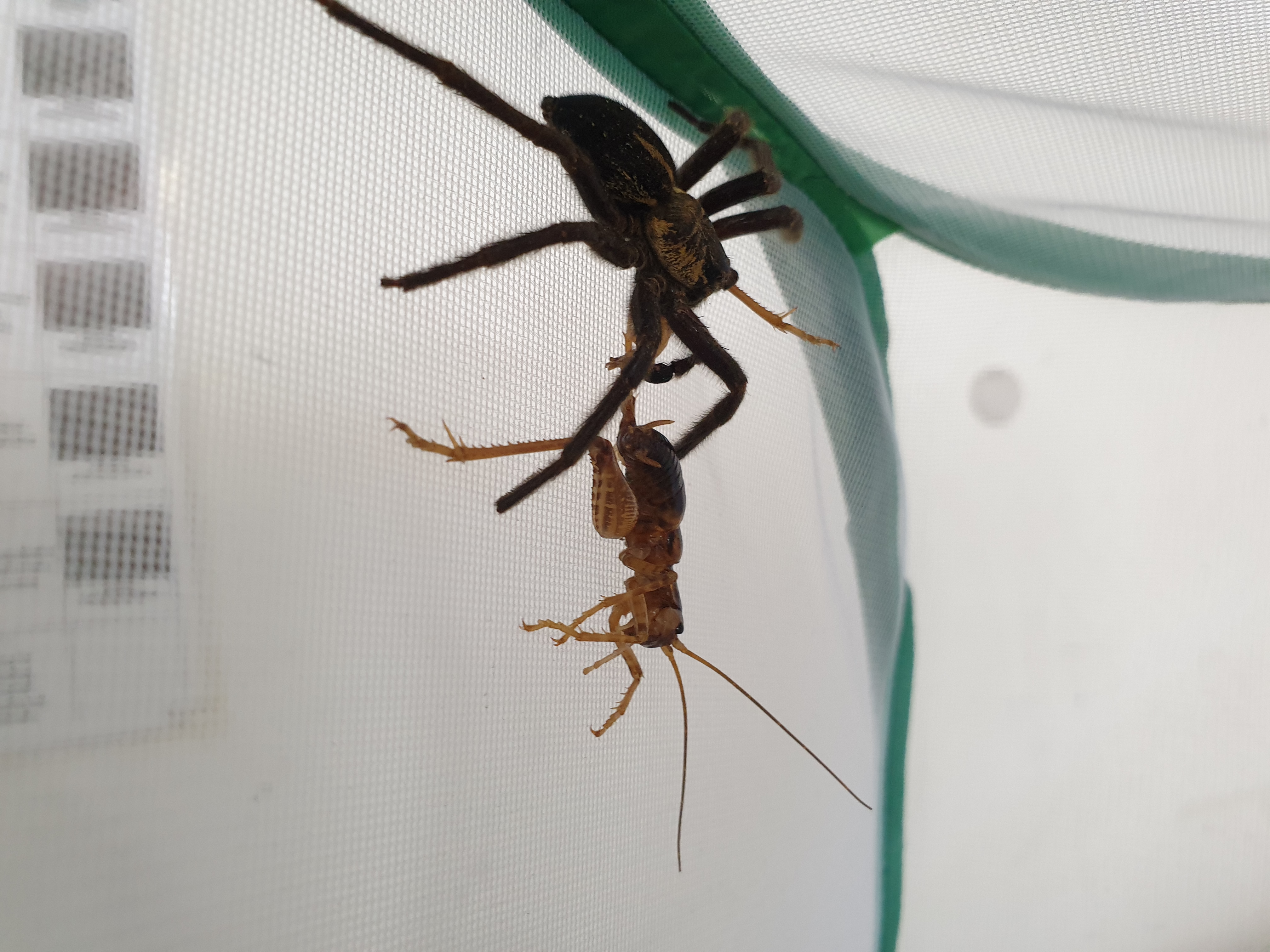
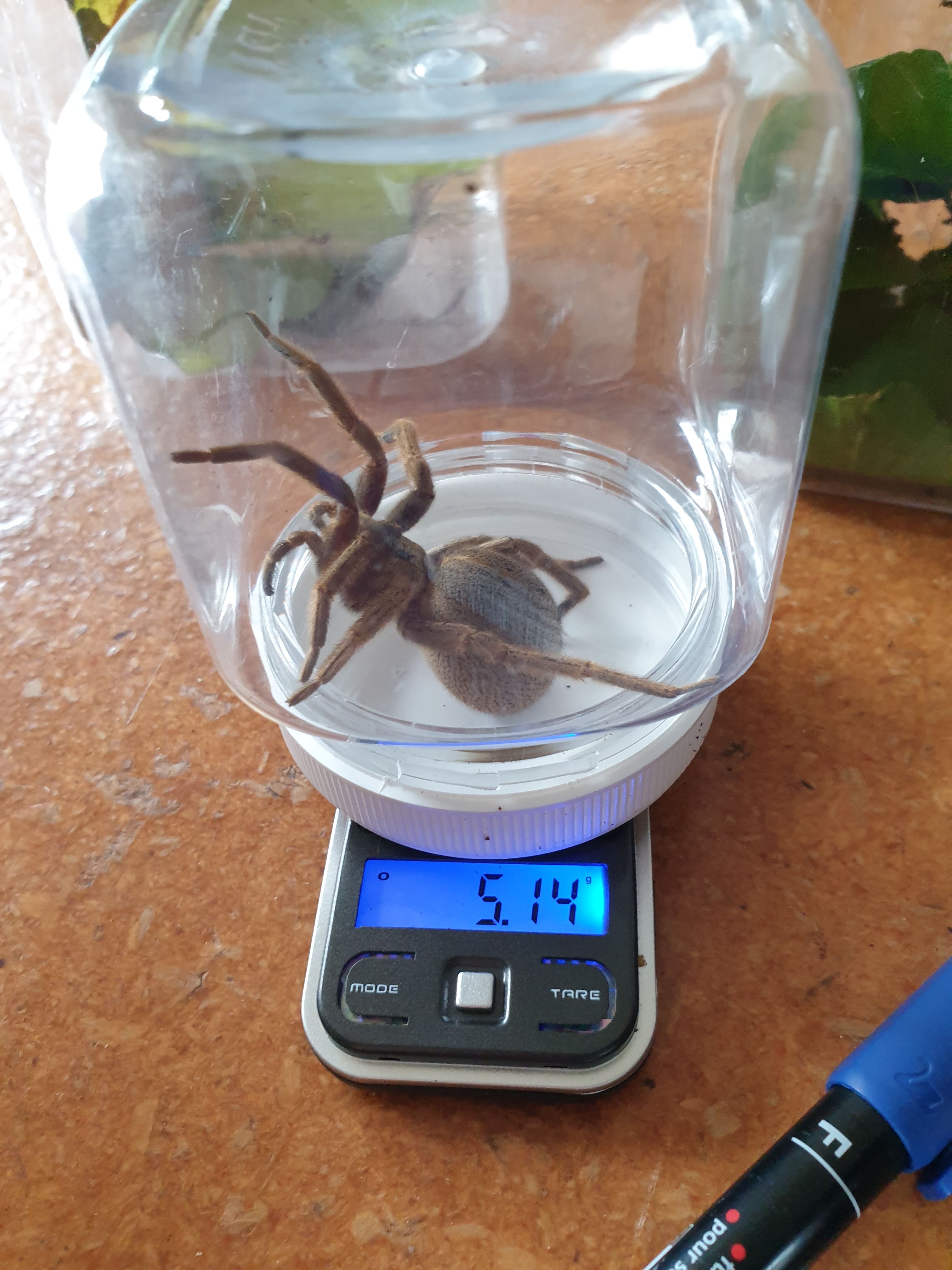
During my time on Maung’re and Hokorereoro I did nightly walks between 9.30pm and midnight, using my head torch to capture reflections from their eyeshine. This is the easiest way to find spiders in the dark. On Maung’re I didn’t have much luck finding spiders on the tracks near the hut – in total over six nights 2 adult females and 7 adult males were located (no juveniles). They were all found on large akeake (Olearia traversiorum) trees, on the ground next to the track, or, in the case of two of the males, on the hut deck waiting to greet us after a long night out searching!


However, on Hokorereoro I was in for a pleasant surprise. Unlike the habitat around the hut on Maung’re, which is quite scrubby, the hut on Hokorereoro is surrounded by lush forest. On my first night out, as I shone my head torch into the trees, I was rewarded with lots of glimmering eye shine – and on closer inspection, many Rangatira spiders. After the initial excitement of the first night, I spent the remaining three nights doing systematic transect monitoring, where I would walk 200 metres along the track towards the summit from the hut, recording spiders along the way. Finding spiders this way allowed me to test out the idea of a mark-recapture programme, which could be a useful way in future to estimate the population size and demography.
Every time I found a new spider I would take a GPS location and note where it was caught, then I’d take it back to the hut to weigh and mark with non-toxic white paint and a unique number. I would then return them back to their capture spots, release them and head off to catch some sleep. On subsequent nights I would search for both new spiders, and anytime I saw a previously marked spider I would record its number. Over four nights, 8 adult females, 12 adult males, and 16 juveniles were observed on akeake, karamu (Coprosma chathamica) and kawakawa (Piper excelsum) trunks. Of those, there were 10 re-sights (32% of released individuals), which was a good indication that a larger scale mark-recapture programme would be an excellent tool for conservation management. The main challenge to spider monitoring is constantly having to dodge seabirds as they come crashing through the canopy in return to their burrows. Rainy weather also makes observations difficult, with droplets resembling eye shine and trees turning into waterfalls.

capture site

So, what about sexual cannibalism, spontaneous death and genital mutilation? To describe mating behaviour, I set up pairs of males and females in mesh cages on the hut deck (Maung’re) and in the bird lab (Hokorereoro). There wasn’t much movement until about 9.30pm, when the spiders would start walking around once it was dark. I watched one male court a female by slowly approaching her, waving his front legs as he moved forward. He eventually climbed gingerly on top of her, and attempted to mate for about an hour – but it was difficult to confirm whether he successfully mated as he constantly rearranged himself and didn’t appear to manage to insert his pedipalps (sperm transfer organs). I didn’t observe any sexual cannibalism by the female or evidence of other extreme male mating behaviours, but with only a handful of trials it is too soon to make any conclusions.
Future work on this species is required to reveal secrets about its mating behaviour, but also importantly to learn more about its ecology. A key question regarding their conservation is why – given Dolomedes spiders are well-known to be great ballooners – they are no longer found on Rēkohu or Rangiaotea/Rangiauria/PittIsland. They are likely targets of predation by mice and weka, which may prevent re-establishment, but we need more research to answer these questions.
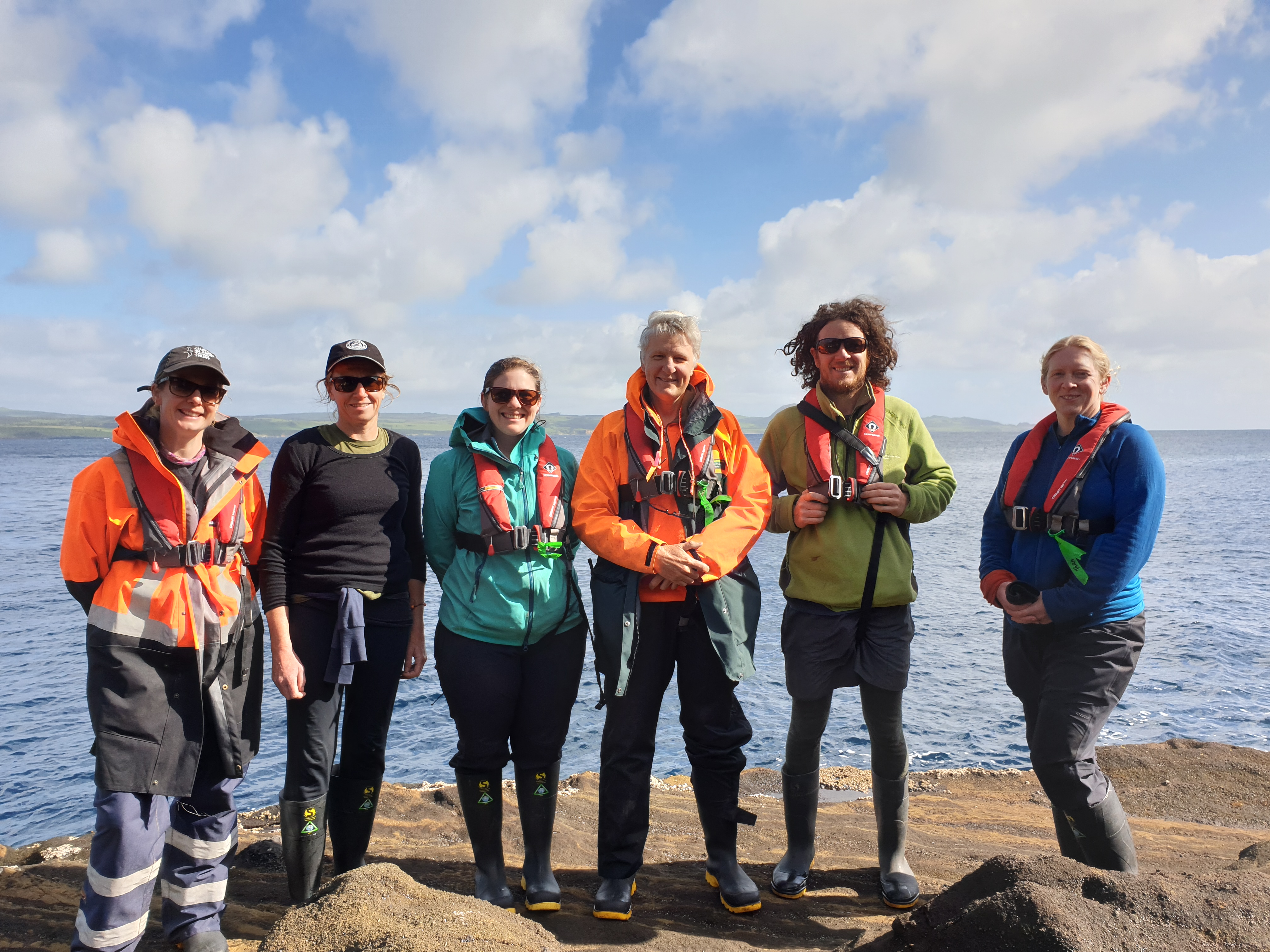
Thank you to Catherine Beard (DOC) for enthusiastically supporting me to join the trip, to Tara Murray (DOC) for being my invertebrate monitoring partner & for staying up nights to help with spider spotting, the rest of the island team for putting up with my late night disturbances in the hut, and to the Chatham Island DOC staff for facilitating logistics for our trip. Thanks also to the Hokotehi Moriori Trust for putting us up for five nights at Kōpinga Marae while we waited for calm weather to cross to the islands, it was an honour to sleep in such a beautiful place.
Further reading:
- Schwartz, S. K., W. E. Wagner, & E. A. Hebets (2013) Spontaneous male death and monogyny in the dark fishing spider. Biology Letters. https://doi.org/10.1098/rsbl.2013.0113
- Sirvid, P. J., C. J. Vink , M. D. Wakelin , B. M. Fitzgerald , R. A. Hitchmough & I. A.N. Stringer (2012) The conservation status of New Zealand Araneae, New Zealand Entomologist. 35:85-90, DOI: 10.1080/00779962.2012.686310
- Vink, C. J., N. Duperre. (2010) Fauna of New Zealand Number 64 Pisauridae (Arachnida: Araneae). Manaaki Whenua Press, Lincoln, New Zealand.
- Studying the sex lives of spiders: https://www.waikato.ac.nz/news-opinion/media/2022/studying-the-sex-lives-of-spiders



 Invertebrate Behavioural Ecology Lab