
Dawn of Biological Accuracy
I have a confession to make. As an arachnologist, I have a lot of fondness for Spiderman. This webslinging hero does more for the image of my chosen species than any amount of science communication ever could. However, ever since I was a kid, my favourite superhero has been Gotham’s Dark Knight, the Caped Crusader…Batman. Which is the better superhero? Who would win in a fight? There’s really no way to know, but what we can figure out is which of these animal themed heroes represents their namesake best. Through this contest I will compare these two juggernauts of the genre and determine in a totally scientific and unbiased manner who is the most biologically accurate superhero! Grab your grappling hooks, it’s time for Batman vs Spiderman: Dawn of Biological Accuracy.

Round 1: Anatomy/Appearance
Basically, the question here is, who mimics their animal’s body the best? Now, clearly Batman is at something of an advantage here, by choosing an animal with the same number of legs as him…but let’s try and give Spidey a fair chance.
Spiderman does share a lot of biological characteristics with spiders. “Spiderman” 2002 clearly show his ability to climb walls comes from hooks and hairs on the ends of his limbs, and this version even has web-producing organs. However, it really does come down to that question of limbs, doesn’t it…and spiderman simply doesn’t have enough. “But Simon”, I hear you cry “Both Superior Spiderman and Tom Holland’s MCU Spiderman have robotic extra arms, bringing them up to 8 limbs! Surely that’s the right number!!” Well, whilst I thank you for the specificity of your references dear reader, you are incorrect. Spiders actually have 10 limbs (sort of). Next to their mouth, spiders have a pair of appendages known as pedipalps. Whilst small, they do look a lot like legs (in females at least) and are sometimes referred to as limbs. Spiders can use them for all sorts of things, usually handling food, though some females use them to carry their eggs around with them. Male spiders also house their genitals inside these pedipalps! In scorpions, these pedipalps actually make up the claws! So, in summary, Spiderman really should have 10 limbs, not 8. Batman on the other hand is the clear winner. He usually has bat-like wings and ears. He is “warm blooded” like a bat, and thanks to evolution, the bones in Bruce Wayne’s arm are the same as the bones in a bat’s wing…just shaped a little differently.
Batman 1 – 0 Spiderman

Round 2: Abilities
Using their gadgets and powers, who can mimic their animals abilities the best?
This is where I must confess, I am not a bat scientist, so there may be some flaws in my analysis. However, Batman seems to be doing VERY well in this round. Bats are known for their abilities of flight, hearing/echolocation, and hanging upside down. Many versions of Batman can at least glide, and in “Batman Begins” and “The Dark Knight” we see him using gadgets to enhance his hearing and create images using sonar. In “Batman” 1989 and the Arkham video games, we even see Batman hanging upside down for long periods. However, is he as good as a bat? Could a gliding batman catch a moth in his mouth? Could he fly from a cave with thousands of other batmen and not crash into them? Unlikely.
Spiderman also does well here. As mentioned, he can create webs, climb on walls, and from trying to catch spiders I can tell you that they share his Spidey Sense. He also has “the proprtional speed and strength of a spider”, which depending in which spider you choose is probably accurate (though I once calulated that if he could run as fast as a Dolomedes spider, he should be able to run at over 200kph).
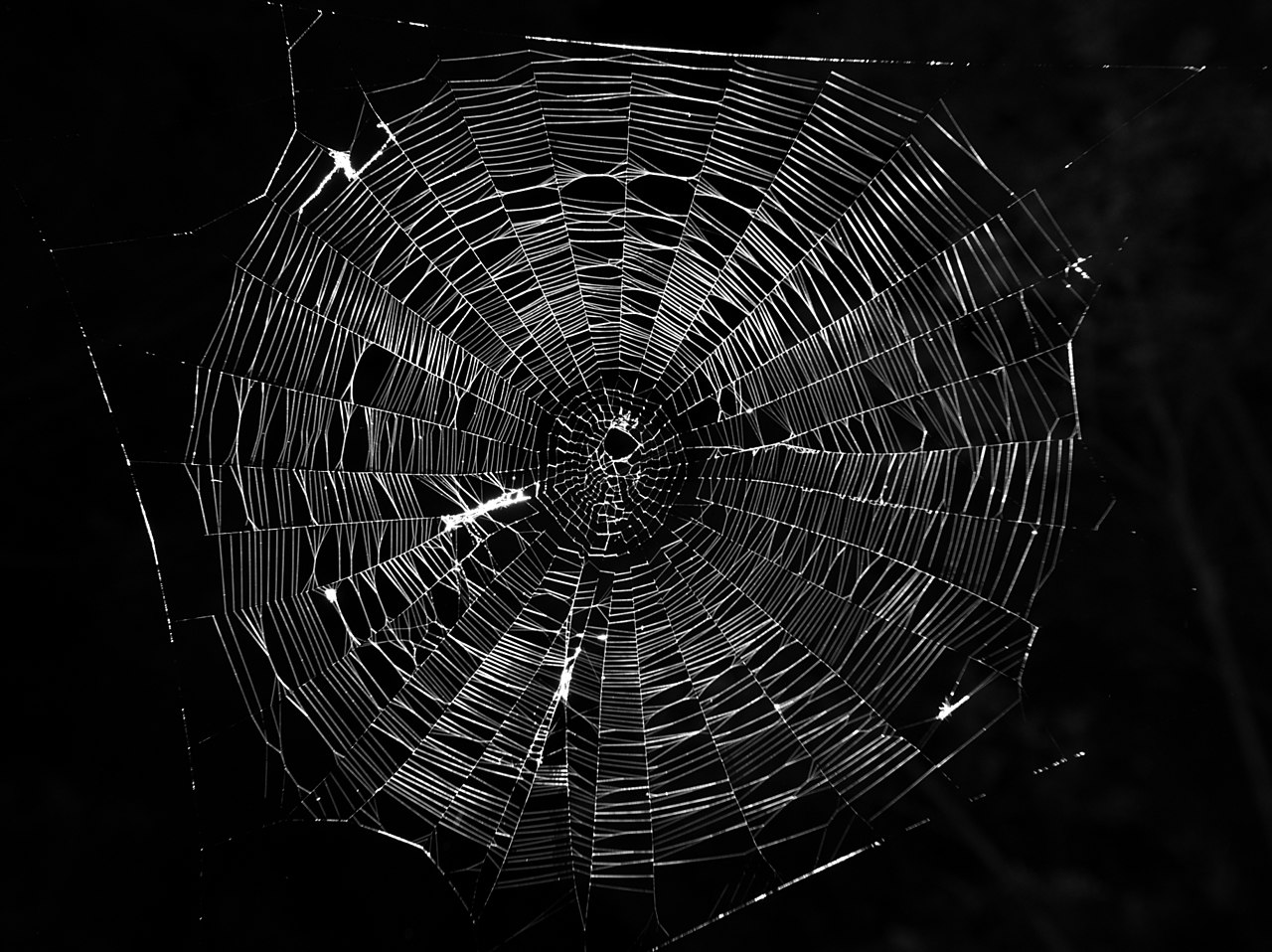
However, for this round, I’d like to discuss an underated ability of spiders: geometry. To build orbwebs, spiders have the incredible ability to construct a complex geometric shape in 3D space and modify its design to suit their environment! This is a kind of intelligence we don’t usually think about in animals…but it’s an intelligence Peter Parker possesses. In “Spiderman: No Way Home” Spiderman battles Doctor Strange in the Mirror Dimension. How does he win? He realises the Mirror Dimension is “just geometry, you’re great at geometry” and catches the sorcerer supreme in a web. So yes, Spiderman wins this round because Peter Parker is a geometry nerd.
Batman 1 – 1 Spiderman
Round 3: Villains
Any C-list superhero will tell you that a hero is only as cool as his villains…but do the villains that that Batman and Spiderman face represent the natural enemies of their animals? Well, let’s go through some of their most popular villains and see what we can find.
Batman: The Joker (nope), The Riddler (whilst bats are probably bad at Riddles…no), Bane (no), Scarecrow (…hmmmm, no), Two Face (Bats have very few rights in the legal system), Poison Ivy (maybe…), Catwoman…ah hah!! Right here in Aotearoa cats are a threat to our endangered bats!
Spiderman: Doctor Octopus (Octopuses don’t meet many spiders, I don’t think),The Green Goblin (give me a break), Mysterio (oh, that hologram loser), Sandman (NO), Electro (…not really), The Lizard (Yes!). As relatively large vertebrates, lizards would definitely love eating spiders!
So both heroes have at least 1 villains who would be a threat to their animal of choice. BUT…is Catwoman really a villain? The Lizard actually tries to kill and eat Spiderman most of the time…so I will give the point to Spiderman here!
Batman 1 – 2 Spiderman
Spiderman wins! He is officially the most biologically accurate hero!
Batman is still cool tho.



 Invertebrate Behavioural Ecology Lab