
It’s been a while since we sent an update from the Painting lab, but it’s not from lack of news. The lab has had lots of exciting things happen recently and we need to celebrate in this time of deep uncertainty in Aotearoa and the world.
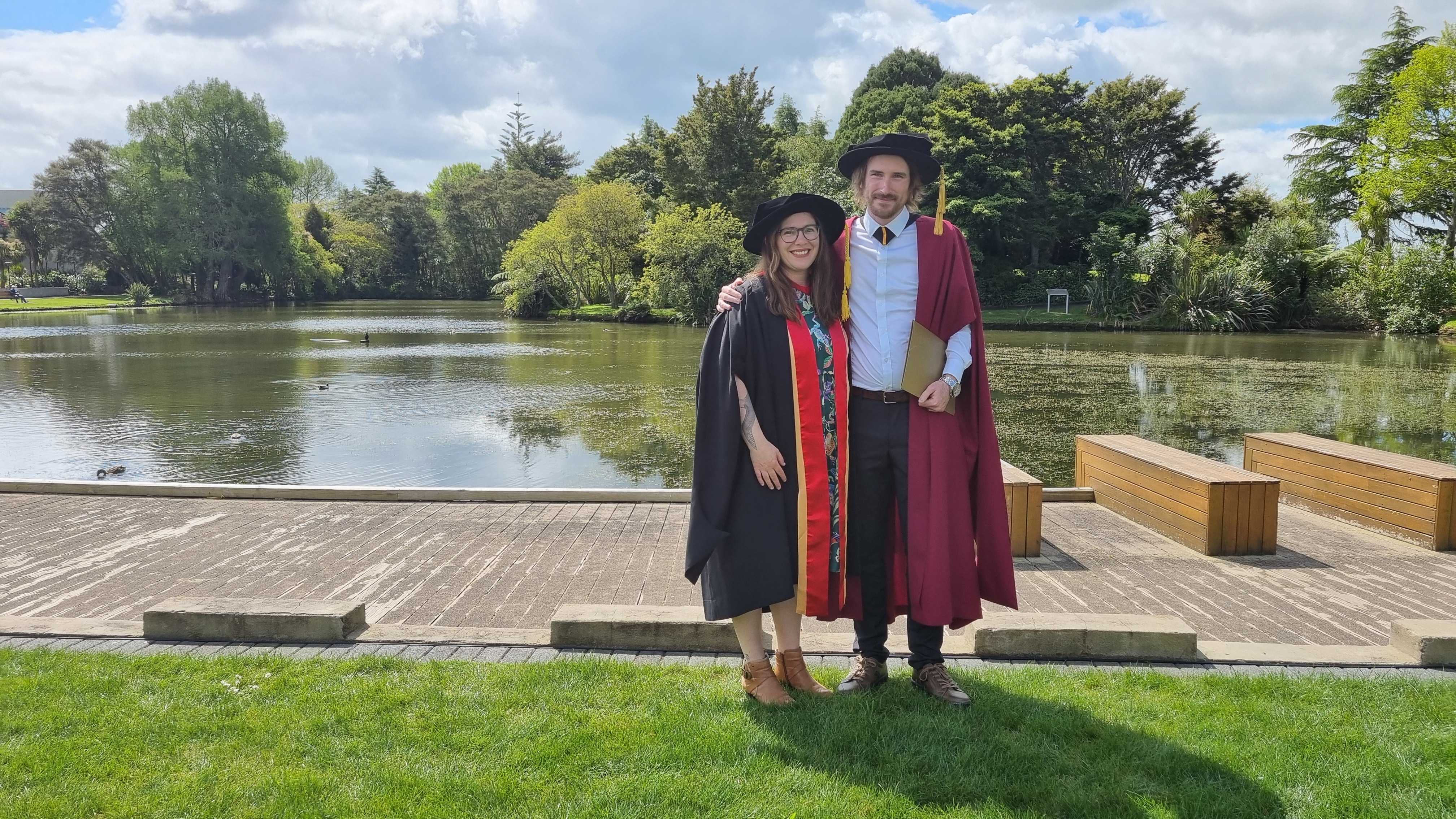
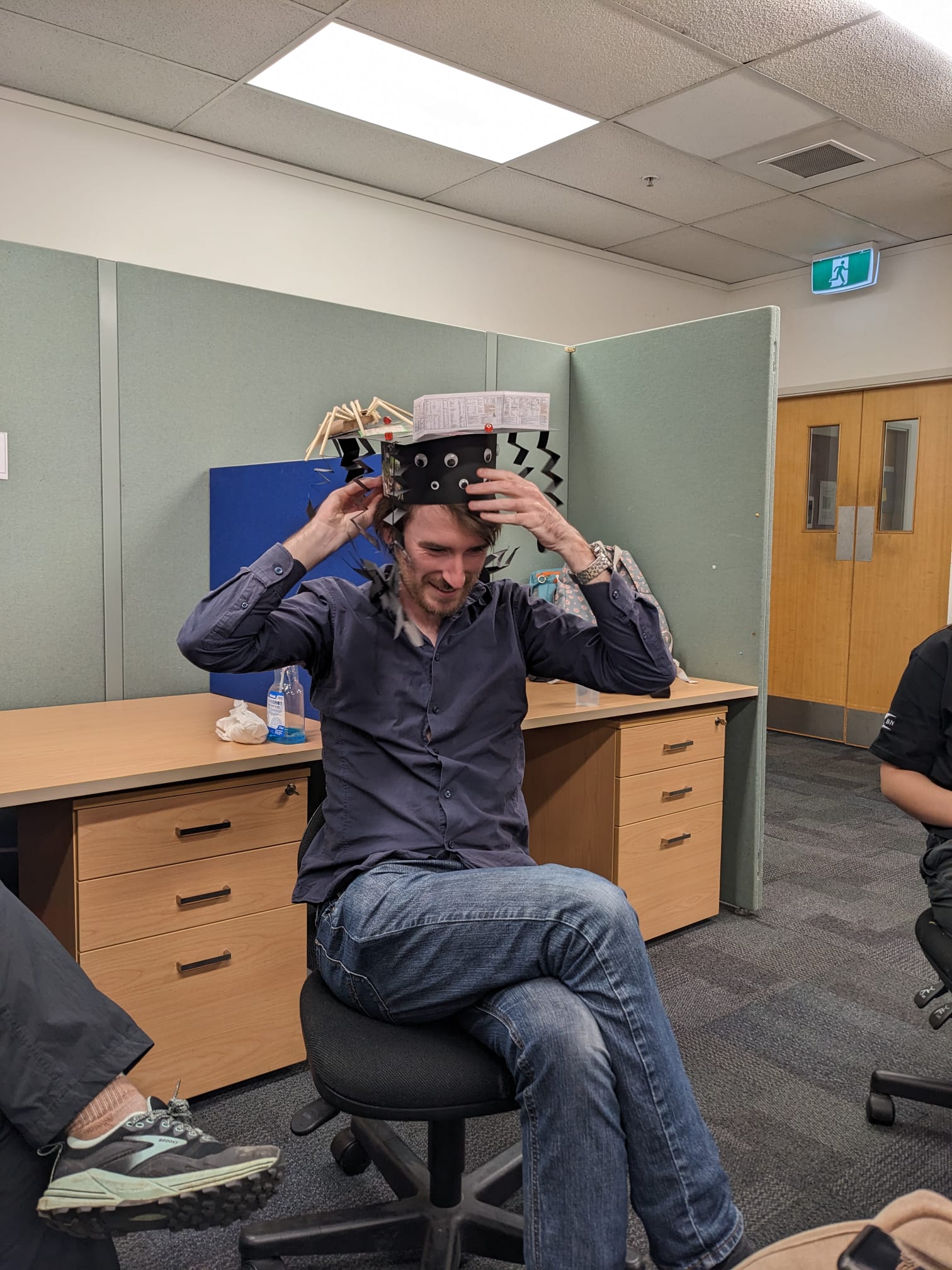
Firstly, in October we celebrated Simon’s PhD graduation at a beautiful ceremony in The Pā at the University of Waikato. Simon has since had both his first PhD paper published (see here) and has secured a job at Ecological Solutions. We’re proud of you Simon!
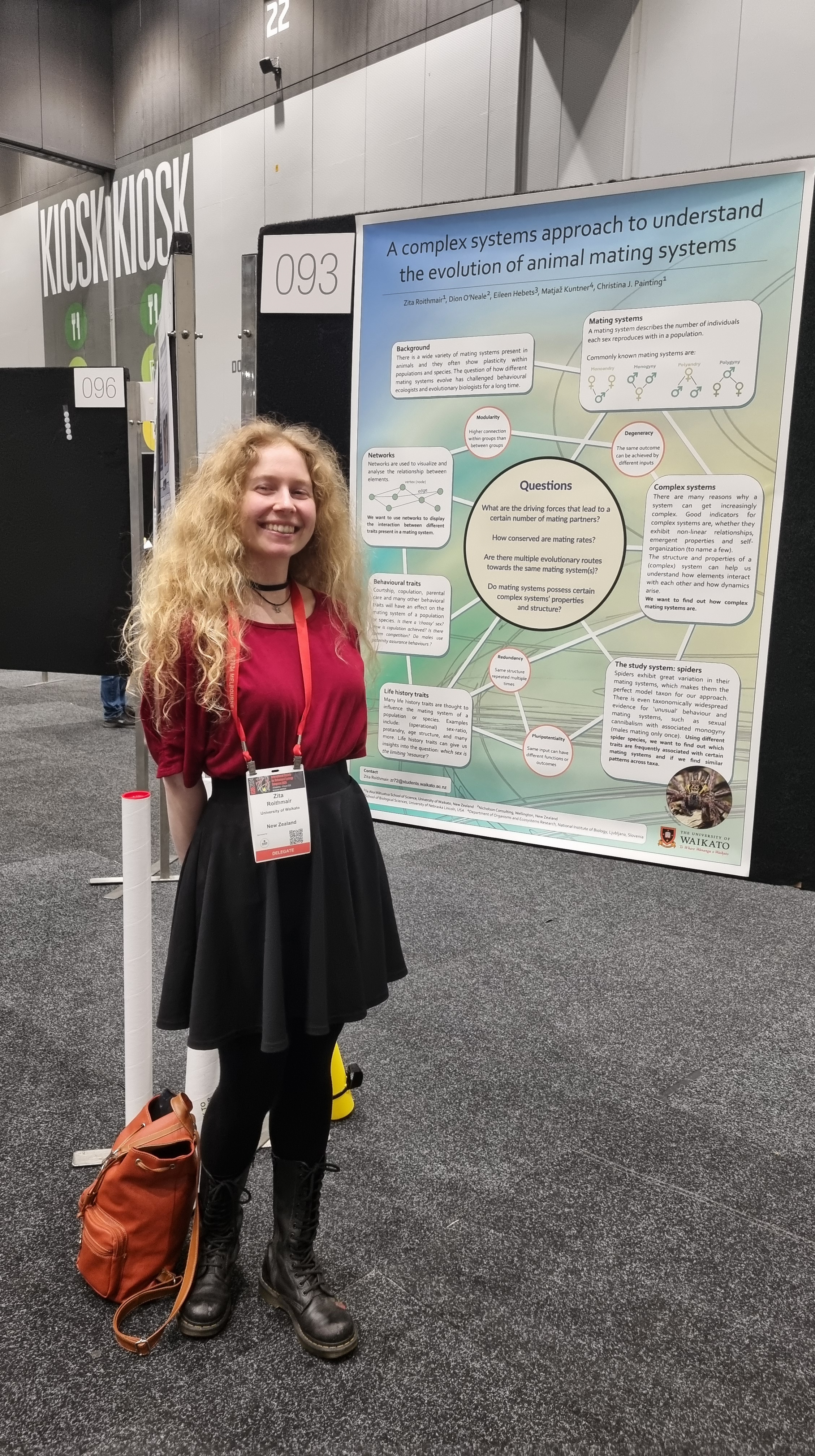
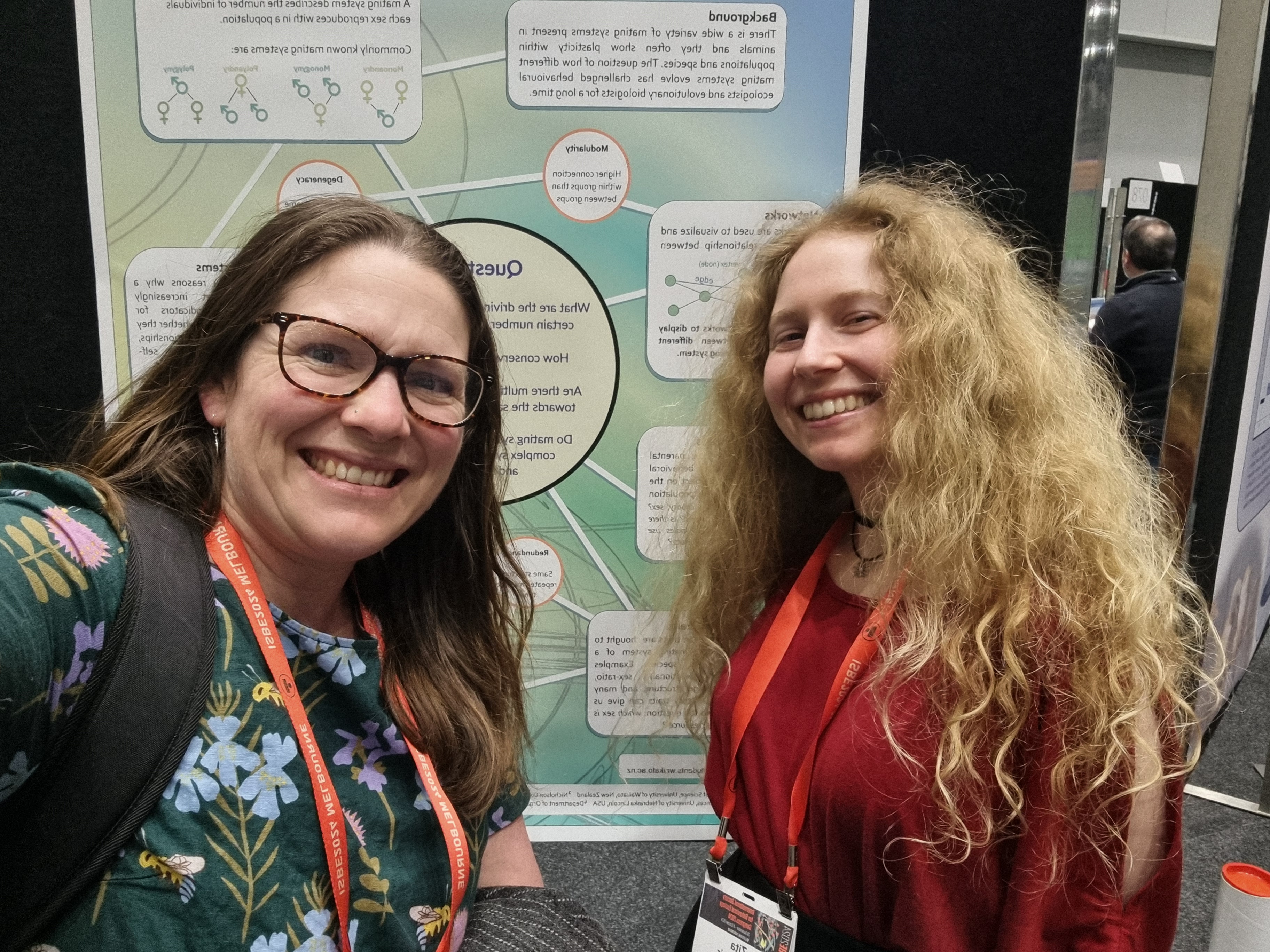
In October, Chrissie and Zita also spent a week in Naarm/Melbourne for the International Behavioural Ecology conference. Zita presented an excellent poster on the complex systems approach to studying mating systems that we are exploring, and we both had a great time connecting with other behavioural ecologists from around the world.
In December, Chrissie was awarded an inaugural Mana Tūānuku Research Leader Fellowship from the Royal Society. This is a really exciting opportunity to expand the research breadth of our group and seek new connections with community in Aotearoa and abroad. Chrissie will be exploring the interaction between natural and sexual selection from the impacts of climate change on cuticular hydrocarbons in NZ giraffe weevils.

Our group has also had a busy summer in the office, lab, and field, especially for our research on Dolomedes fishing spiders. Late last year our group published a review article on Dolomedes biology with our fabulous collaborators in Slovenia and the USA, co-first authored by PhD students Zita Roithmair and Kuang-Ping Yu. We hope this will be a really useful overview of what we know so far about these spiders, as well as generating a bunch of research avenues for the future.
Zita has also been busy on Hokorereoro/Rangatira island investigating the behaviour and ecology of one of our most special Dolomedes spiders. She’s spent most of the summer on this very remote island in the Chatham Island archipelago.

Zita has been joined on Hokorereoro/Rangatira island by Caleb, who is investigating the diet of karure/kakaruia/Chatham Island black robin and the invertebrate food availability across current and future translocation sites for this critically endangered bird. Caleb has completed the first stage of his field season and will head back to the Chatham Islands next week to do more invertebrate sampling and collecting robin poo for metabarcoding analysis.

Back in mainland Aotearoa, Juniper has been rearing Dolomedes dondalei as part of her Masters research on their mating behaviour and ecology. She’s been doing regular monitoring of a population of fishing spiders in the Waikato and conducting mating experiments in the lab. Juniper has been joined by our wonderful summer scholarship student Han Logan, who has been integral in keeping our cricket colony alive, as well as doing some neat experiments investigating personality and anti-predator responses in the fishing spiders.


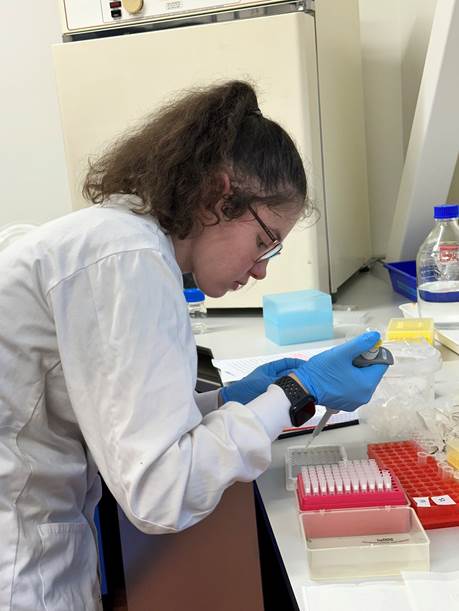
Last week, we also welcomed Aranturua Tao to the lab. Arnaturua is joining us from Hamilton East School under the Science Teaching Leadership Programme, administered by the Royal Society. Arnaturua will be joining in on all our lab activities to gain a deeper understanding of how we do science, so that she can strengthen the science curriculum at her primary school. Welcome Arnaturua!

Finally, we are celebrating Epernay handing in her Masters thesis this week. Wahoo! Epernay has completed a fascinating project looking at the effects of population density on reproductive investment and physiology in honey bees. It is a fantastic example of a project that is both fundamentally insightful and practically important for the bee keeping industry. Epernay has also won several scholarships and talk prizes during her MSc(Research), and is a great communicator. Congratulations Epernay!

 Invertebrate Behavioural Ecology Lab