
Over the summer, Goldie joined the Invertebrate Behavioural Ecology lab as a summer scholarship student, where she worked on a project focused on insect cuticular hydrocarbons (CHCs) alongside PhD student Lucy. Research on CHCs is just beginning in our lab, following Chrissie being awarded a Mana Tūānuku Research Leader Fellowship in 2025. Cuticular hydrocarbons act like waxy blankets coating the bodies of insects, where they prevent these little critters from drying out in hot conditions. What makes them even more interesting is that they also double as chemical messages, helping insects to work out whether the individual they’ve bumped into is a potential mate, a rival to compete with, or a nest mate they can safely ignore.
As part of this work, Goldie contributed as a second reviewer to a systematic review that aims to identify broad trends in the cuticular hydrocarbon literature, a process that involved reading and screening several thousand abstracts of published papers. Goldie reports that this experience provided valuable insights in the how to do a systematic review, from assessing relevance and methodological quality to synthesising findings across studies.
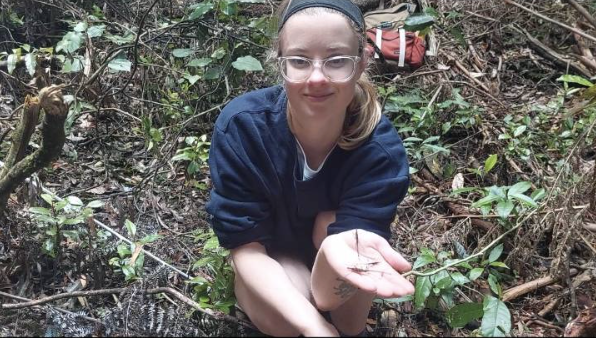
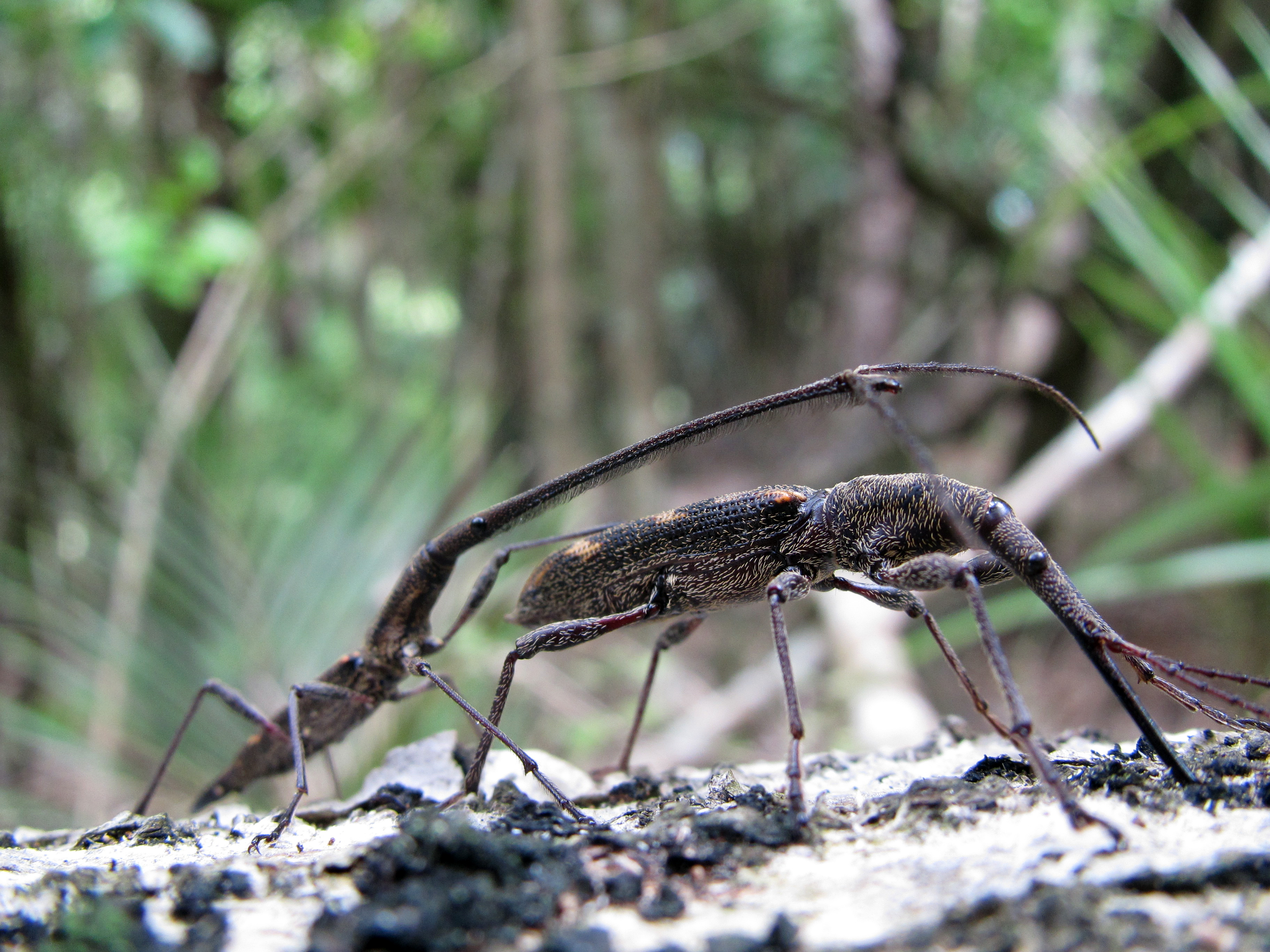
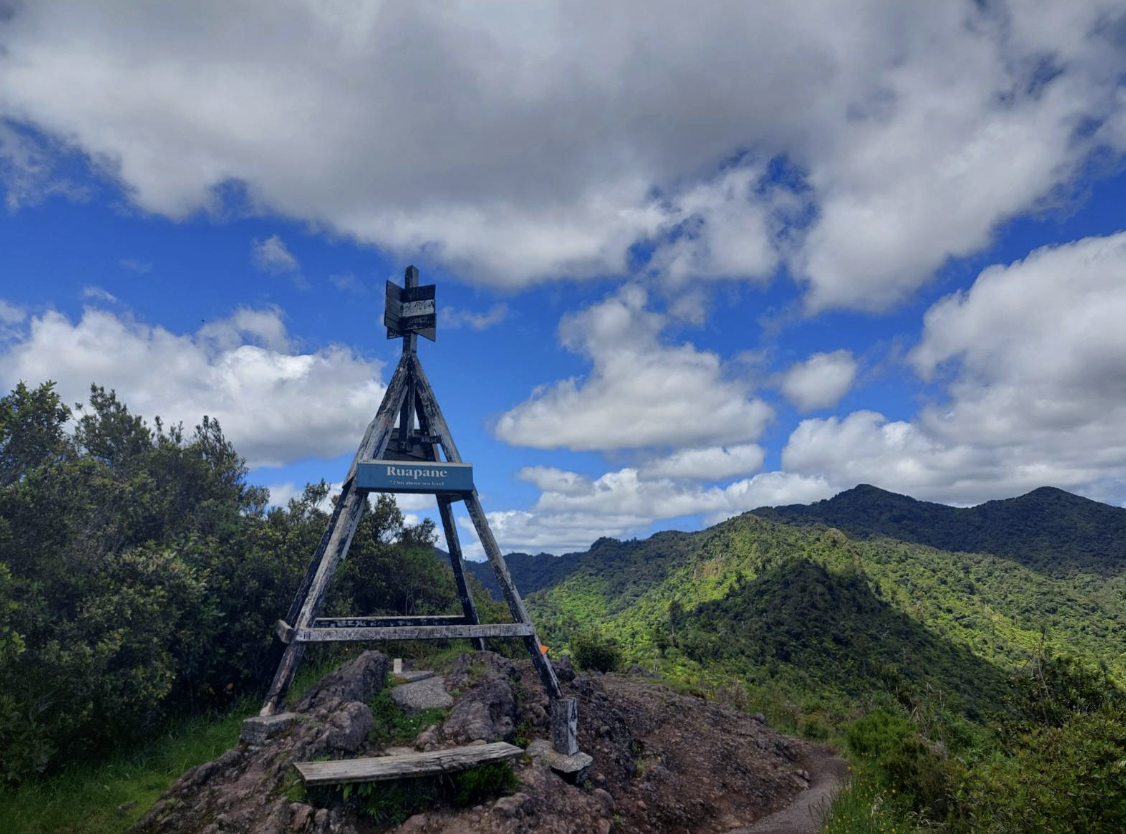
While this work required a LOT of sitting at a computer, Goldie was able to get away from her desk from time to time. She took on responsibility for maintaining our lab cricket colony, learning first-hand about the challenges of raising insects – and finding out just how cannibalistic they are! She also spent time in the field collecting pepeke nguturoa/New Zealand giraffe weevils, which are going to be used by Lucy for analysis of their CHCs. We aim to describe the CHCs of male and female pepeke nguturoa and see how different these chemical coatings are between the sexes and among adults of very different body sizes. Pepeke nguturoa are typically found in native bush habitats during summer, often on fallen logs. Out at Sanctuary Mountain Maungatautari, Goldie learned to locate them by identifying tell-tale signs of larval activity, such as fine sawdust produced as larvae tunnel through wood.
While Goldie’s summer in the Invertebrate Behavioural Ecology lab is about to end, we’ll still get to see her around as she begins her Masters research – even if it is on plants instead of insects!
 Invertebrate Behavioural Ecology Lab