Over the summer, Goldie joined the Invertebrate Behavioural Ecology lab as a summer scholarship student, where she worked on a project focused on insect cuticular hydrocarbons (CHCs) alongside PhD student Lucy. Research on CHCs is just beginning in our lab, following Chrissie being awarded a Mana Tūānuku Research Leader Fellowship in 2025. Cuticular hydrocarbons act like waxy blankets coating the bodies of insects, where they prevent these little critters from drying out in hot conditions. What makes them even more interesting is that they also double as chemical messages, helping insects to work out whether the individual they’ve bumped into is a potential mate, a rival to compete with, or a nest mate they can safely ignore.
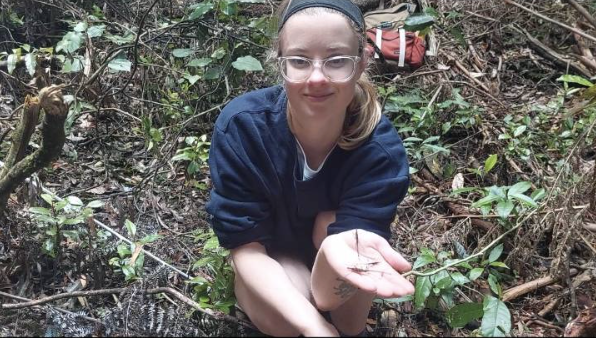
Goldie at Maungatautari with a handful of pepeke nguturoa
As part of this work, Goldie contributed as a second reviewer to a systematic review that aims to identify broad trends in the cuticular hydrocarbon literature, a process that involved reading and screening several thousand abstracts of published papers. Goldie reports that this experience provided valuable insights in the how to do a systematic review, from assessing relevance and methodological quality to synthesising findings across studies.
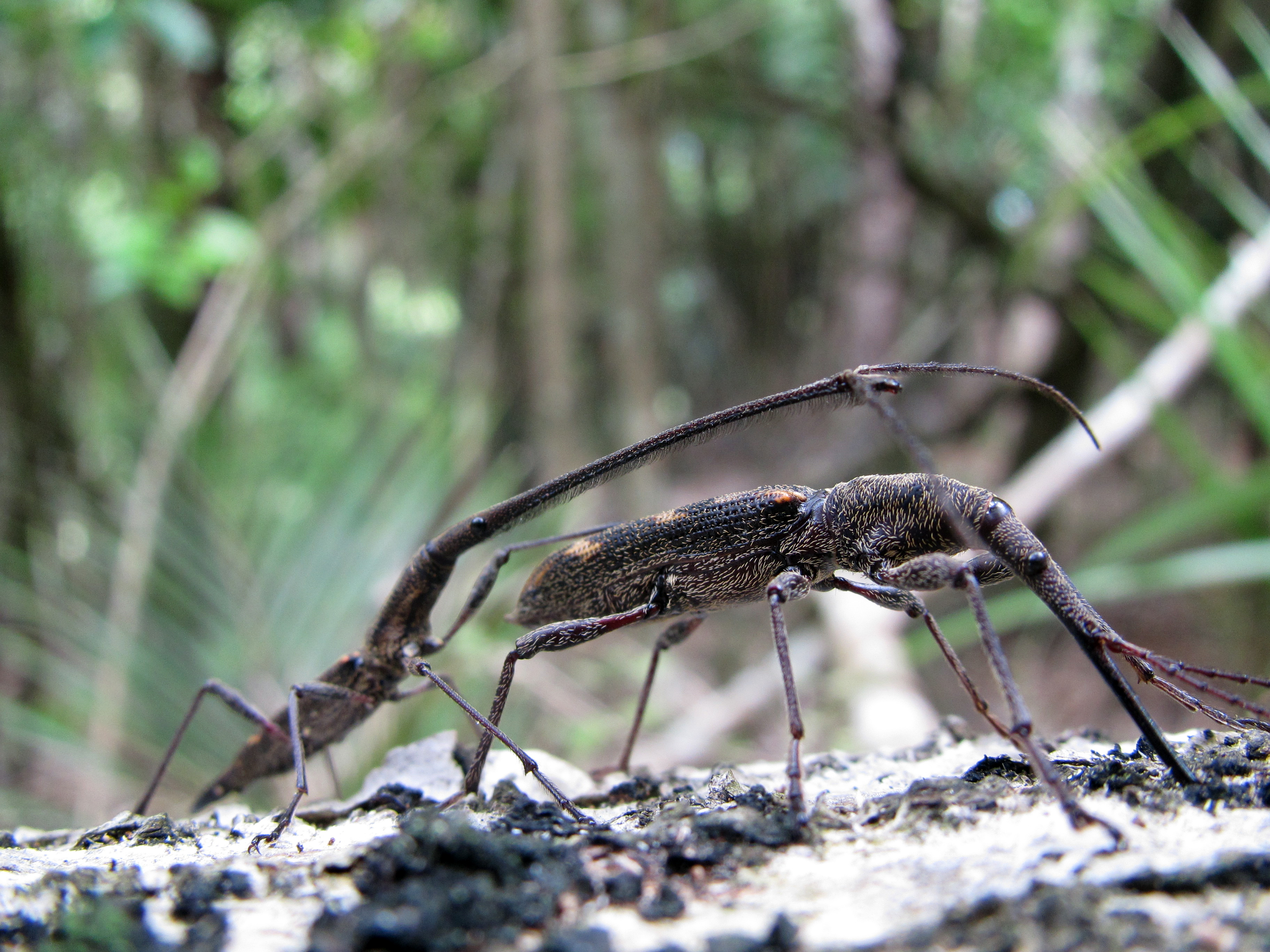
While this work required a LOT of sitting at a computer, Goldie was able to get away from her desk from time to time. She took on responsibility for maintaining our lab cricket colony, learning first-hand about the challenges of raising insects – and finding out just how cannibalistic they are! She also spent time in the field collecting pepeke nguturoa/New Zealand giraffe weevils, which are going to be used by Lucy for analysis of their CHCs. We aim to describe the CHCs of male and female pepeke nguturoa and see how different these chemical coatings are between the sexes and among adults of very different body sizes. Pepeke nguturoa are typically found in native bush habitats during summer, often on fallen logs. Out at Sanctuary Mountain Maungatautari, Goldie learned to locate them by identifying tell-tale signs of larval activity, such as fine sawdust produced as larvae tunnel through wood.
Up close on a pair of pepeke nguturoa
While Goldie’s summer in the Invertebrate Behavioural Ecology lab is about to end, we’ll still get to see her around as she begins her Masters research – even if it is on plants instead of insects!
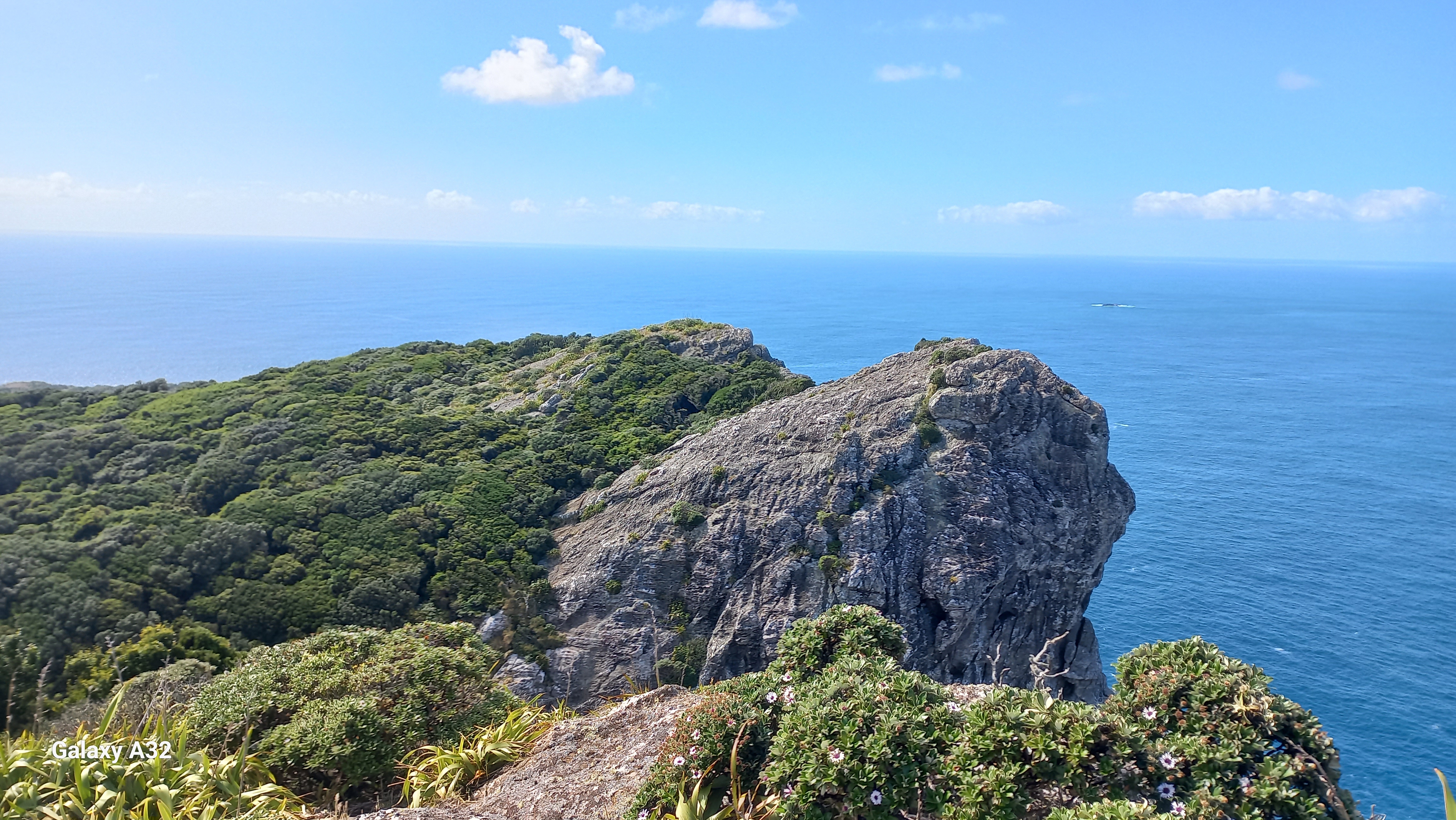
Rekohu | Wharekauri | the Chatham Islands: a group of islands about 800 kilometres east of New Zealand. The most south-eastern island of this archipelago is called Hokorereoro | Rangatira | South East, uninhabited by humans, but populated by lots of wildlife!
Not only is Hokorereoro | Rangatira a beautiful offshore island and very special place, but it is also the home to a very range-restricted fishing spider: Dolomedes schauinslandi. While a couple of Dolomedes species have been studied in regard to their behavioural ecology, there is not much known on the biology of D. schauinslandi (also called the Rangatira spider). That’s why I am here now: I am spending this summer season with the spiders on Hokorereoro | Rangatira studying their ecology, mating behaviour and life history!
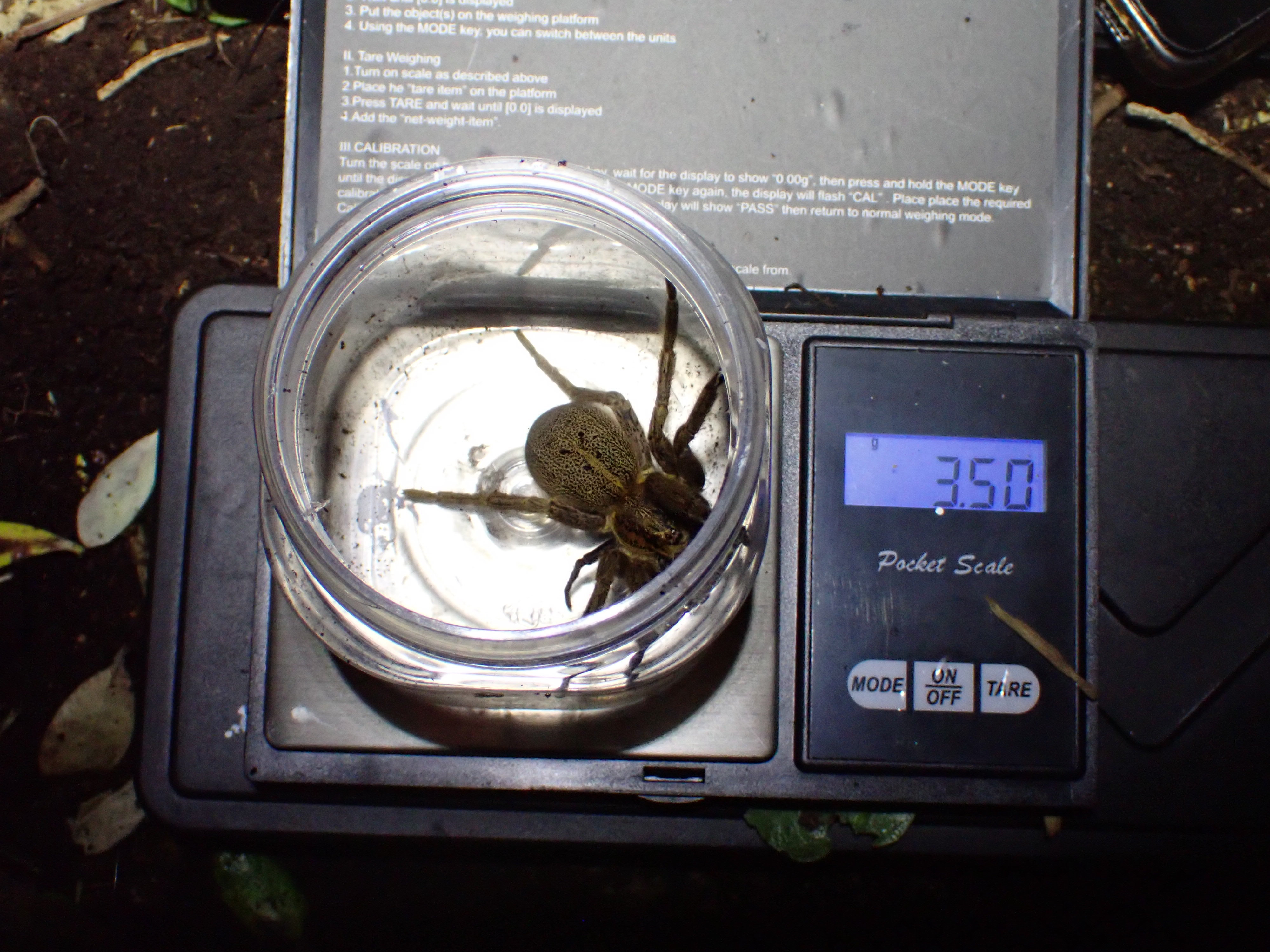
A female Rangatira spider getting weighedA male Rangatira spider with little paint marks to ID him during mark/recapture observations
While fishing spiders are usually known for their astonishing ability to walk and hunt on the water surface of ponds and streams, D. schauinslandi (aka the Rangatira spider) lives on an island with no freshwater bodies and therefore evolved to live and hunt in the forest, mainly on large, old trees. It is incredible how those relatively large spiders can squeeze into the most unrecognizable holes and slits in old wood during the day, just to come out at night and go for a hunt or look for a mate.
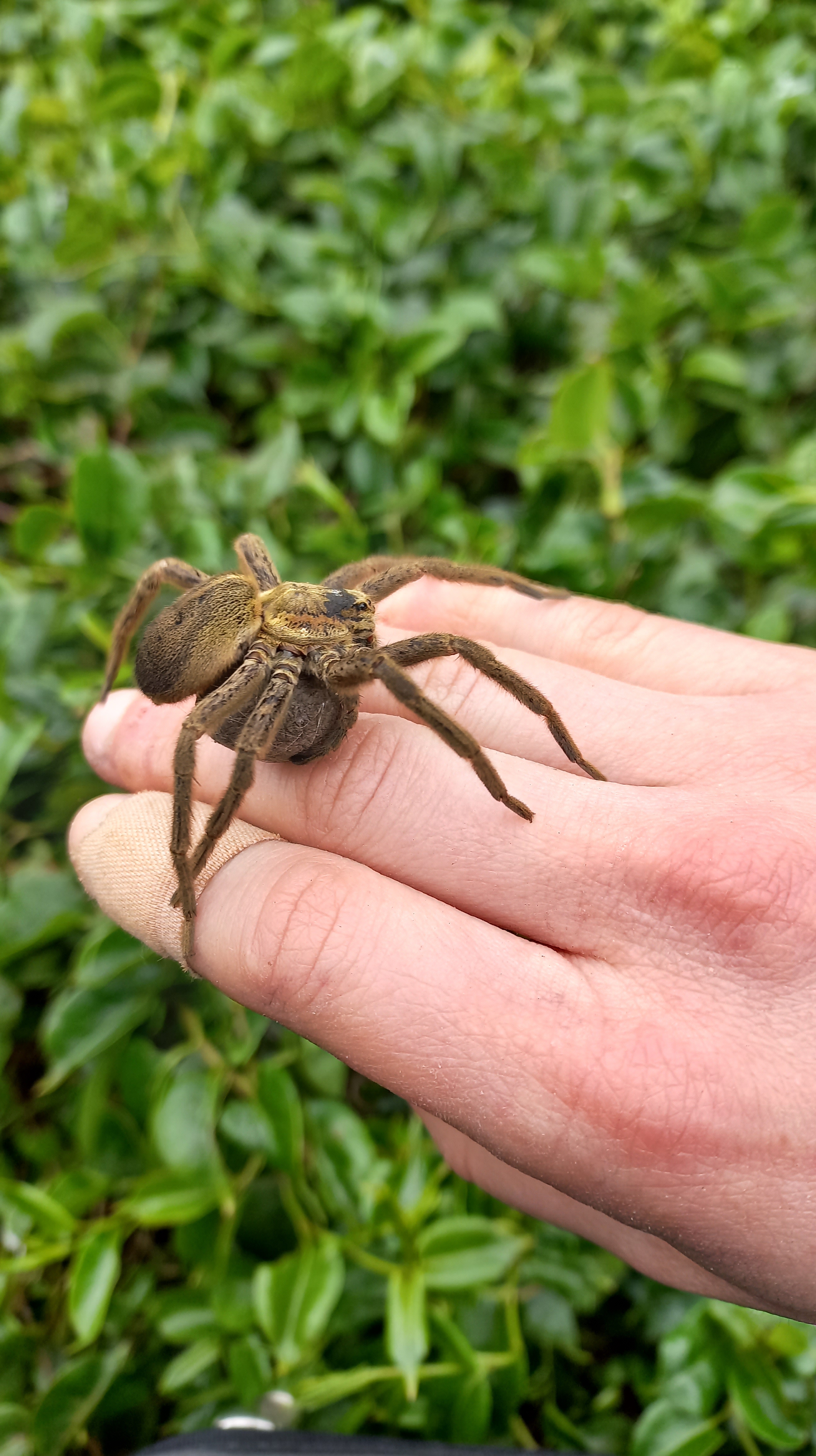
A female Rangatira spider with her egg sacA nursery web – waiting for spiderlings to hatch
While most of my work is taking place in-situ, including monitoring of the spider population with mark-recapture methods since October and since January monitoring of their nursery webs as well, I am also conducting behavioural experiments, such as mating trials to get a more detailed understanding of their mating behaviour.
Zita observing a mama Rangatira spider guarding her babies at nightSearching for nursery webs in the scrub
The results of my fieldwork will give insights into the biology of this amazing species, and also help to get a better understanding of the different mating behaviours in Dolomedes fishing spiders.
It’s been a while since we sent an update from the Painting lab, but it’s not from lack of news. The lab has had lots of exciting things happen recently and we need to celebrate in this time of deep uncertainty in Aotearoa and the world.
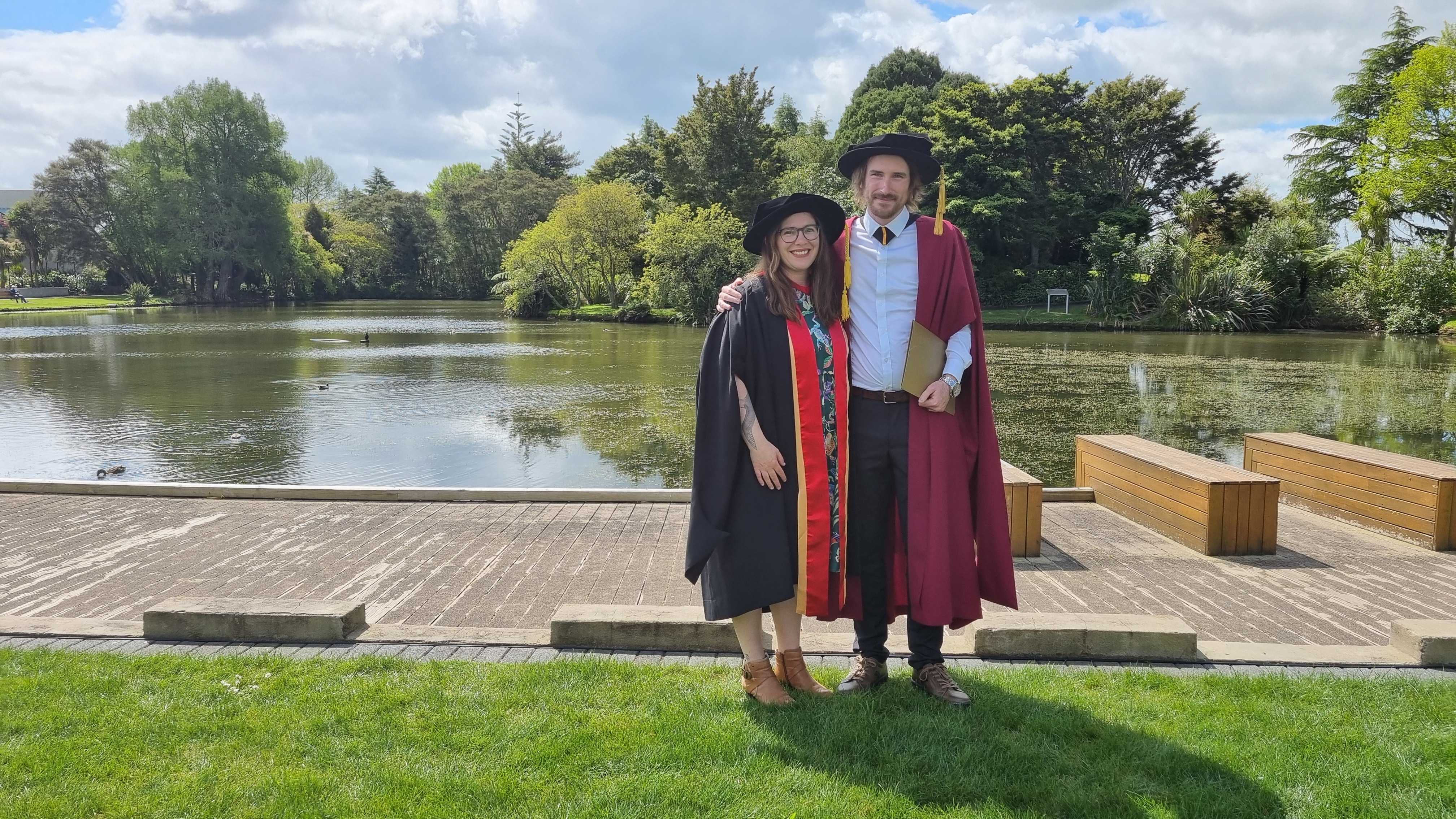
Firstly, in October we celebrated Simon’s PhD graduation at a beautiful ceremony in The Pā at the University of Waikato. Simon has since had both his first PhD paper published (see here) and has secured a job at Ecological Solutions. We’re proud of you Simon!
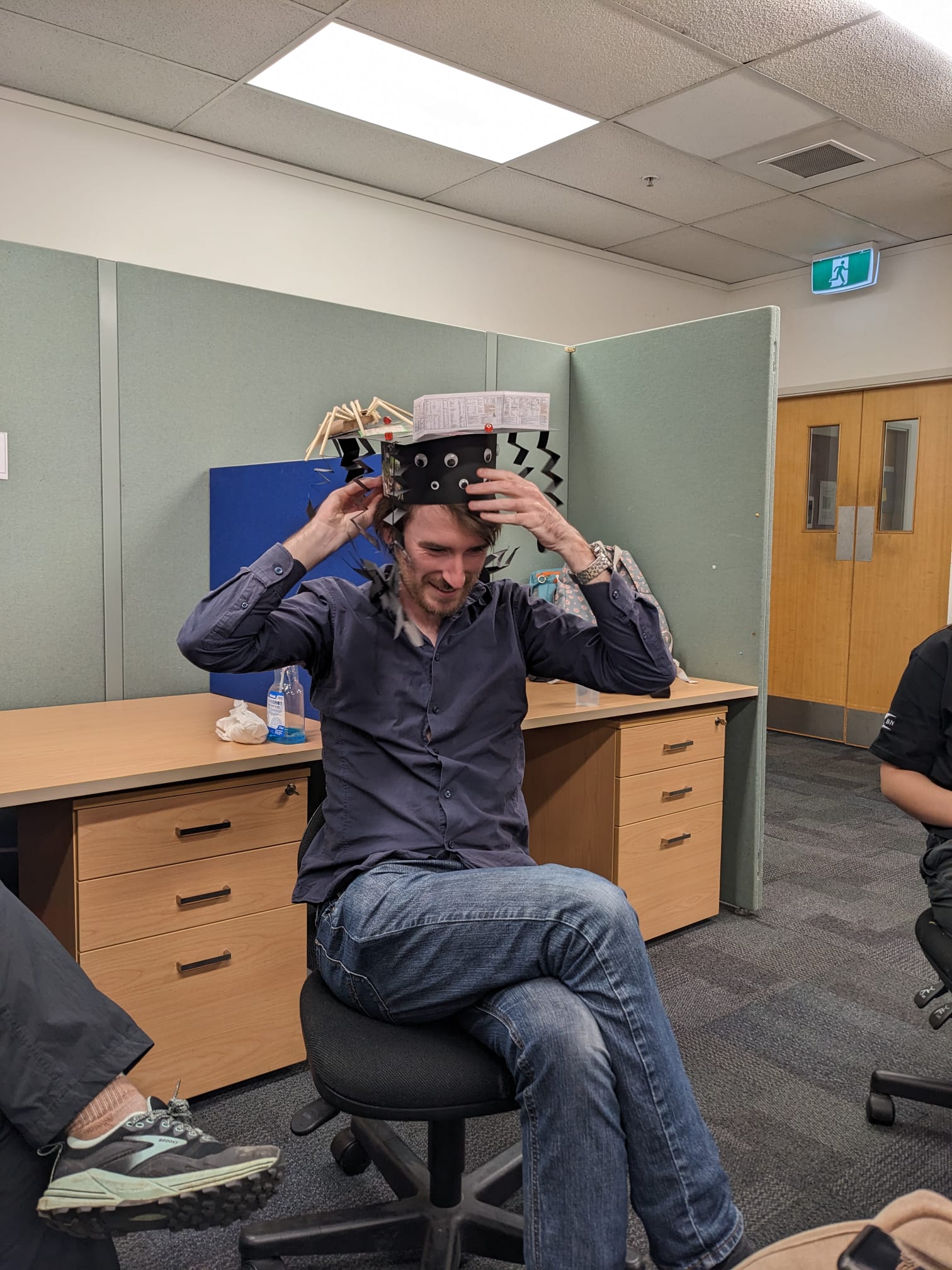
All dressed up Celebrating the oral defense with a very special hat
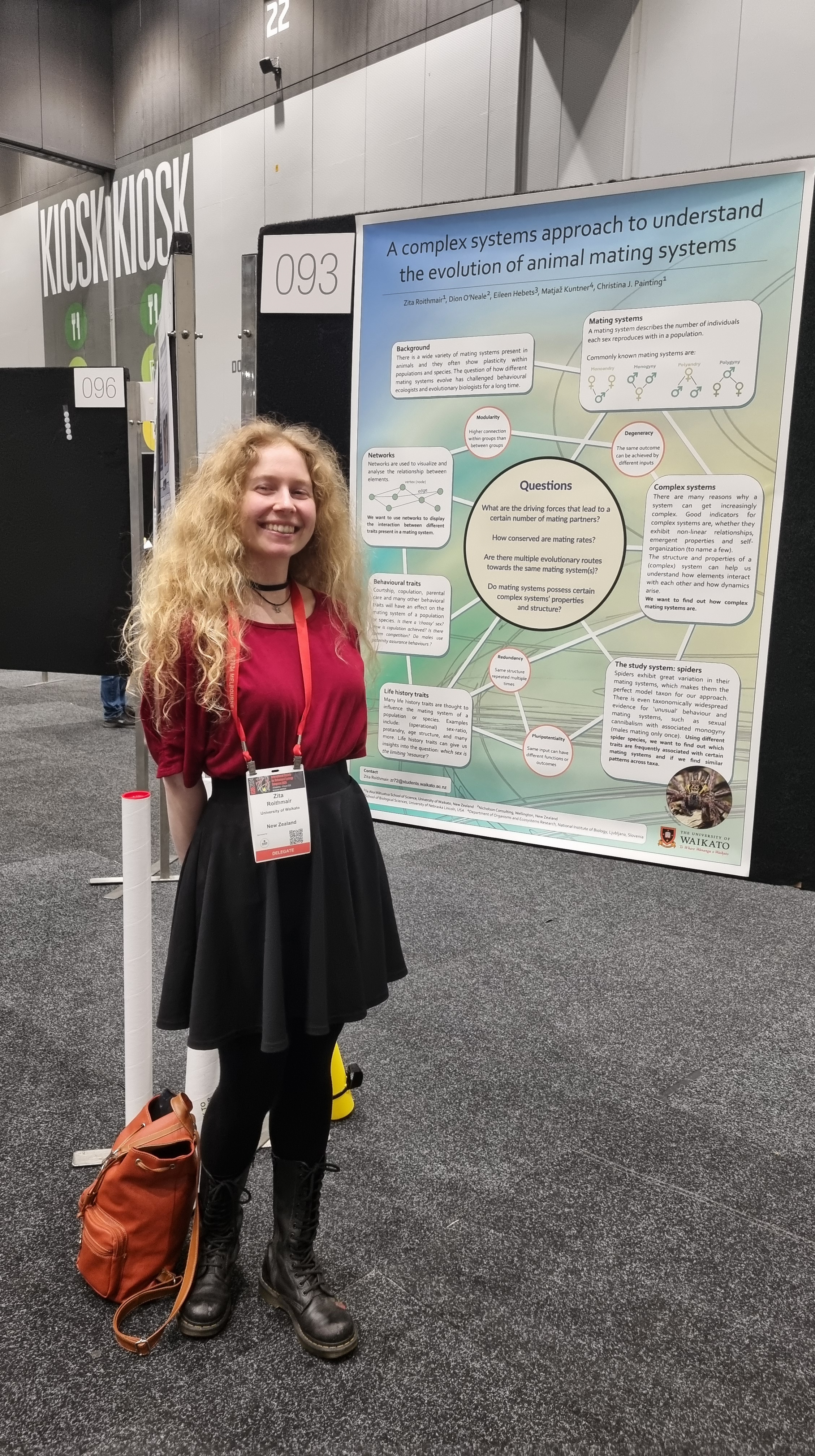
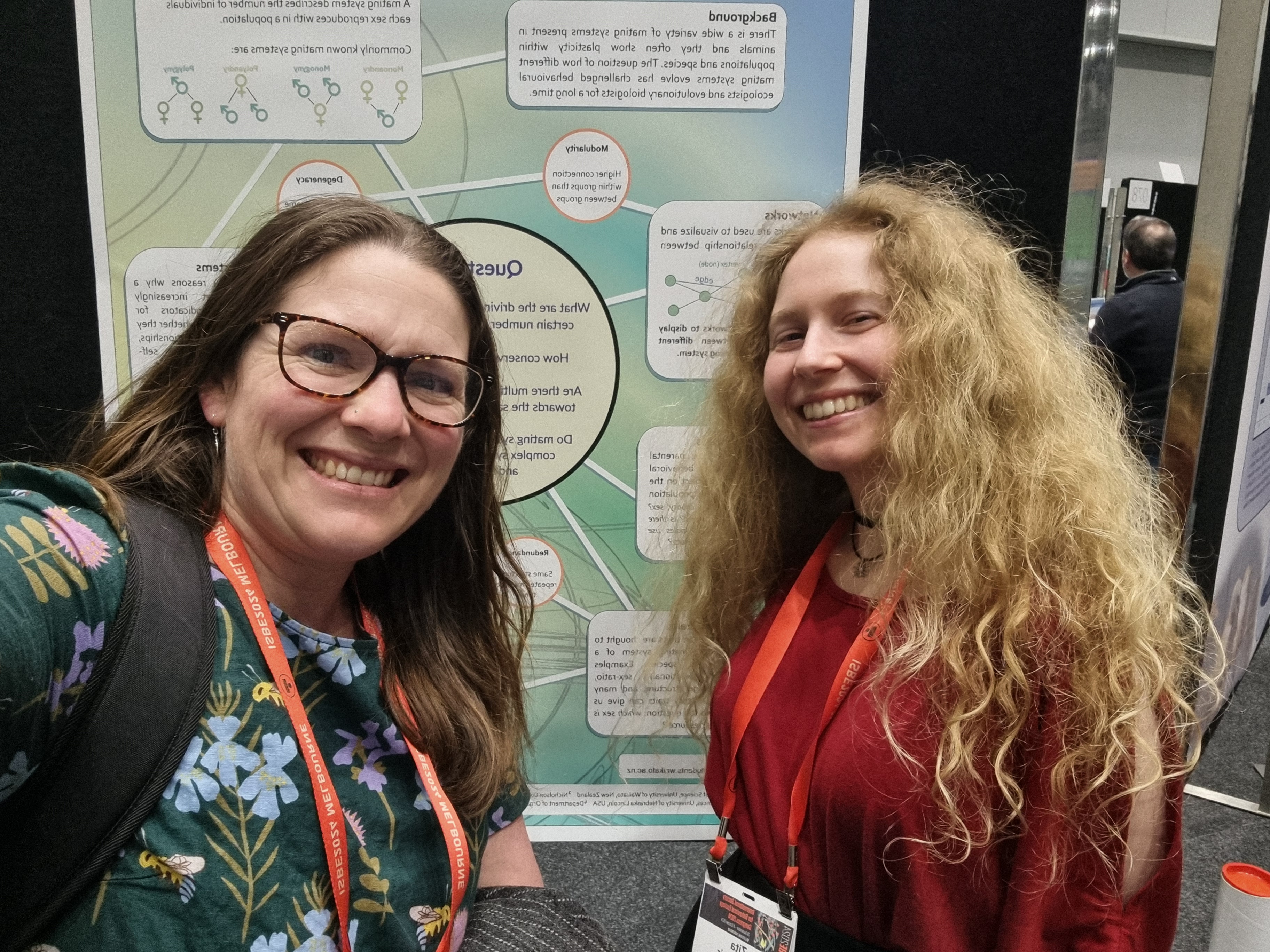
In October, Chrissie and Zita also spent a week in Naarm/Melbourne for the International Behavioural Ecology conference. Zita presented an excellent poster on the complex systems approach to studying mating systems that we are exploring, and we both had a great time connecting with other behavioural ecologists from around the world.
In December, Chrissie was awarded an inaugural Mana Tūānuku Research Leader Fellowship from the Royal Society. This is a really exciting opportunity to expand the research breadth of our group and seek new connections with community in Aotearoa and abroad. Chrissie will be exploring the interaction between natural and sexual selection from the impacts of climate change on cuticular hydrocarbons in NZ giraffe weevils.
Our group has also had a busy summer in the office, lab, and field, especially for our research on Dolomedes fishing spiders. Late last year our group published a review article on Dolomedes biology with our fabulous collaborators in Slovenia and the USA, co-first authored by PhD students Zita Roithmair and Kuang-Ping Yu. We hope this will be a really useful overview of what we know so far about these spiders, as well as generating a bunch of research avenues for the future.
Zita has also been busy on Hokorereoro/Rangatira island investigating the behaviour and ecology of one of our most special Dolomedes spiders. She’s spent most of the summer on this very remote island in the Chatham Island archipelago.
Zita with a very chunky female Rangatira spider
Zita has been joined on Hokorereoro/Rangatira island by Caleb, who is investigating the diet of karure/kakaruia/Chatham Island black robin and the invertebrate food availability across current and future translocation sites for this critically endangered bird. Caleb has completed the first stage of his field season and will head back to the Chatham Islands next week to do more invertebrate sampling and collecting robin poo for metabarcoding analysis.
Food provision delivery day is the best! (aka fresh fruit & veges!)
Back in mainland Aotearoa, Juniper has been rearing Dolomedes dondalei as part of her Masters research on their mating behaviour and ecology. She’s been doing regular monitoring of a population of fishing spiders in the Waikato and conducting mating experiments in the lab. Juniper has been joined by our wonderful summer scholarship student Han Logan, who has been integral in keeping our cricket colony alive, as well as doing some neat experiments investigating personality and anti-predator responses in the fishing spiders.
Juniper admiring a fishing spider at Tunakohoia streamHan forgetting that we’re studying spiders, not golden bell frogs
Last week, we also welcomed Aranturua Tao to the lab. Arnaturua is joining us from Hamilton East School under the Science Teaching Leadership Programme, administered by the Royal Society. Arnaturua will be joining in on all our lab activities to gain a deeper understanding of how we do science, so that she can strengthen the science curriculum at her primary school. Welcome Arnaturua!
Arnaturua joins our group
Finally, we are celebrating Epernay handing in her Masters thesis this week. Wahoo! Epernay has completed a fascinating project looking at the effects of population density on reproductive investment and physiology in honey bees. It is a fantastic example of a project that is both fundamentally insightful and practically important for the bee keeping industry. Epernay has also won several scholarships and talk prizes during her MSc(Research), and is a great communicator. Congratulations Epernay!
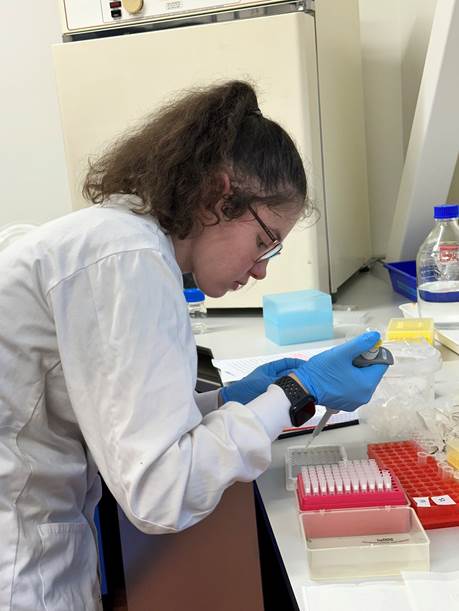
Epernay squeezing drone butts to extract a spermatophoreVery serious sciencing – extracting sperm for analysis
Congratulations to Epernay on winning a Waikato Graduate Women Educational Trust Masters Study Award! Phew that’s a mouthful! Epernay is doing her MSc(Research) with Chrissie and Ashley Mortensen at Plant & Food Research, investigating the ways honey bees respond to increases in sperm competition pressure. Epernay spent many hours in the lab analysing the sperm counts of drone bees from apiaries held at different densities, as well as days in the field counting drone comb at each colony. She’s now busy analysing all the findings and we’re excited to see in what ways (if any) the colony is responding to increased population density in regards to drone and sperm production.
Awesome work Epernay!
Drone (male) honey bee (Photo: Guillaume Pelletier: Wiki Commons)
Earlier this year, Chrissie took on the Senior Editor role at the New Zealand Journal of Zoology, which also coincided with the editing of a special issue on Animal Behaviour across New Zealand and the South Pacific. Together with guest editors Kristal Cain and Steph Godfrey, we invited researchers to submit papers and were delighted to end up with 16 contributions across a wide range of topics in animal behaviour. This included some fantastic buggy pieces on stick insects, wētā, and giraffe weevils. If you’d like to read a brief overview of the special issue and all the great contributions, you can check out our editorial: here. All the publications in this issue are open access, thanks to the Read & Publish agreement.
We’ve been celebrating the success of two of our group lately.
Firstly, a huge congratulations to Simon Connolly for handing in his PhD thesis for examination end of March. Simon has put together a fantastic piece of work on the mating behaviour and mechanisms of introgression on two Aotearoa New Zealand fishing spiders.
Secondly, Zita Roithmair successfully confirmed her enrollment last week & is now an official PhD student in the lab. Zita gave a really convincing seminar on why she’s exploring a complex systems approach to understanding the evolution of animal mating systems. Like Simon, she’ll be working on fishing spiders too, hopefully with some fun field work involved.
In October Chrissie and Zita were both lucky to spend time on the Chatham Islands. Zita will post an update on her amazing 3 weeks on Hokorereoro|Rangatira|South East Island later, but for now, check out Chrissie’s blog post (written with Tammy Steeves) for Te Pūnaha Matatini.
This month we welcome new PhD student Zita Roithmair to the Painting Lab. Zita comes to us from Vienna, Austria, where she has a background in zoology. Her MSc studied the morphology and diversity of sexually dimorphic characters in centipedes, and she is also currently in the final stages of completing a second MSc in Conservation and Ecology.
Zita will be working with Chrissie on the mating systems of Dolomedes fishing spiders, alongside Dion O’Neale (University of Auckland), Eileen Hebets (University of Nebraska-Lincoln), and Matjaž Kuntner (National Institute of Biology, Slovenia).
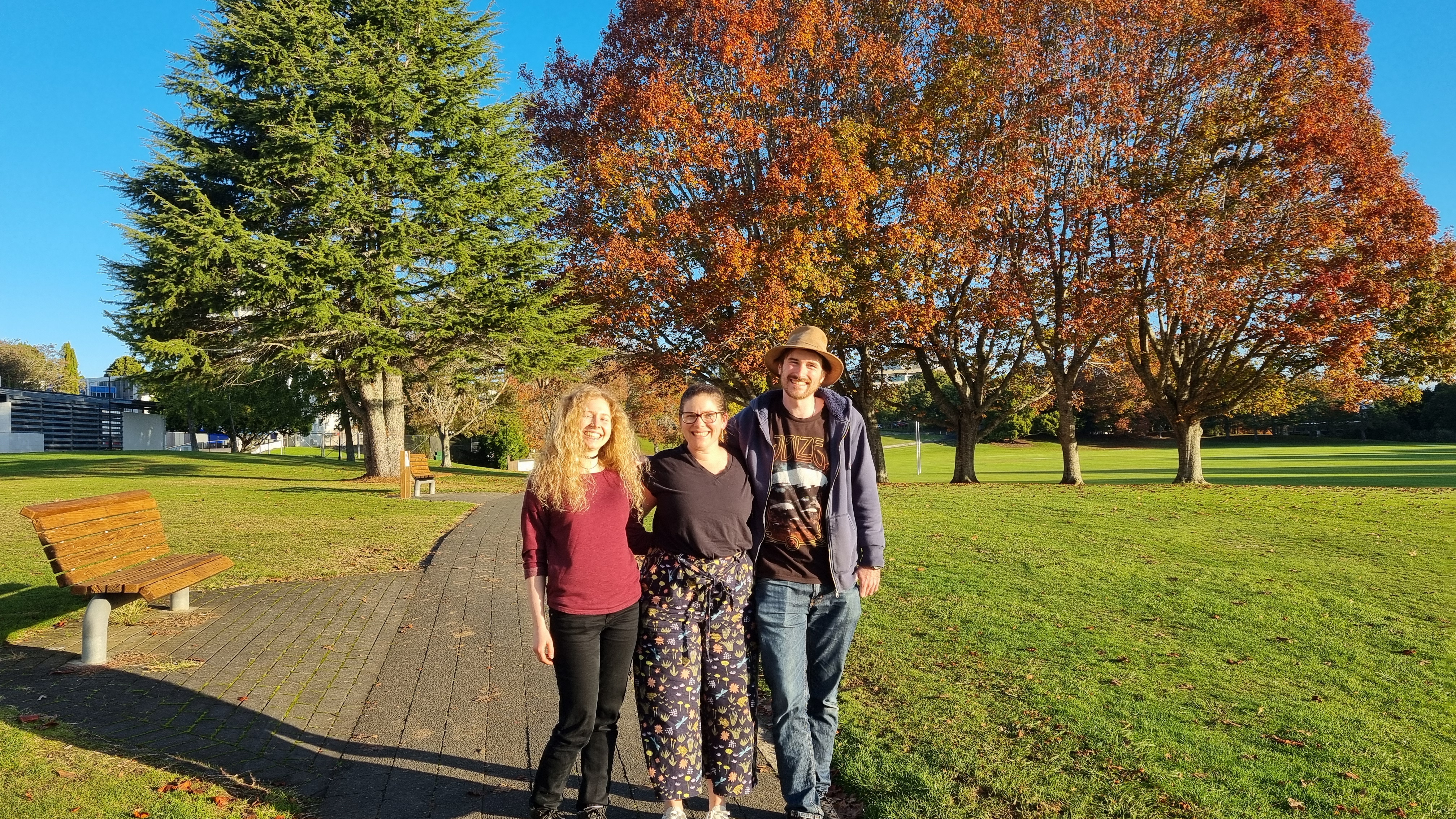
The joint Painting & EcoDiv lab celebrate Zita’s arrival
My name is Bastien Clémot, I’m a 21-year-old Msc student, coming from France to learn more about scientific research and Arthropod behaviours! I will roam the lab corridors under Chrissie’s supervision till late June (Which is a quite short time, unfortunately). My primary objective here is to study the courtship and reproductive behaviours of nursery web spiders, but also to make some observations on Dolomedes dondalei, a species that everyone succeeds to find but me! (Love spiders and they’ll love you back, they said) Overall, I’m mainly interested in evolutionary and behavioural ecology in Arachnids, but also in applied modelisation.
Welcome Bastien! Dolomedes dondalei (Photo: Robert Briggs, Wikipedia Commons)
Apart from my obvious passion and fascination for those cutey-crawlers (who said ‘creepy’?), I might be a blend of a nerd, enjoying fantasy worlds, writing, role-playing, coding, and video games; and a nature lover, always eager to go hiking, bouldering, making wildlife observations and naturalist drawings! But globally I think that it’s just an unexhaustive list, as I tend to have spontaneous interest in everything.
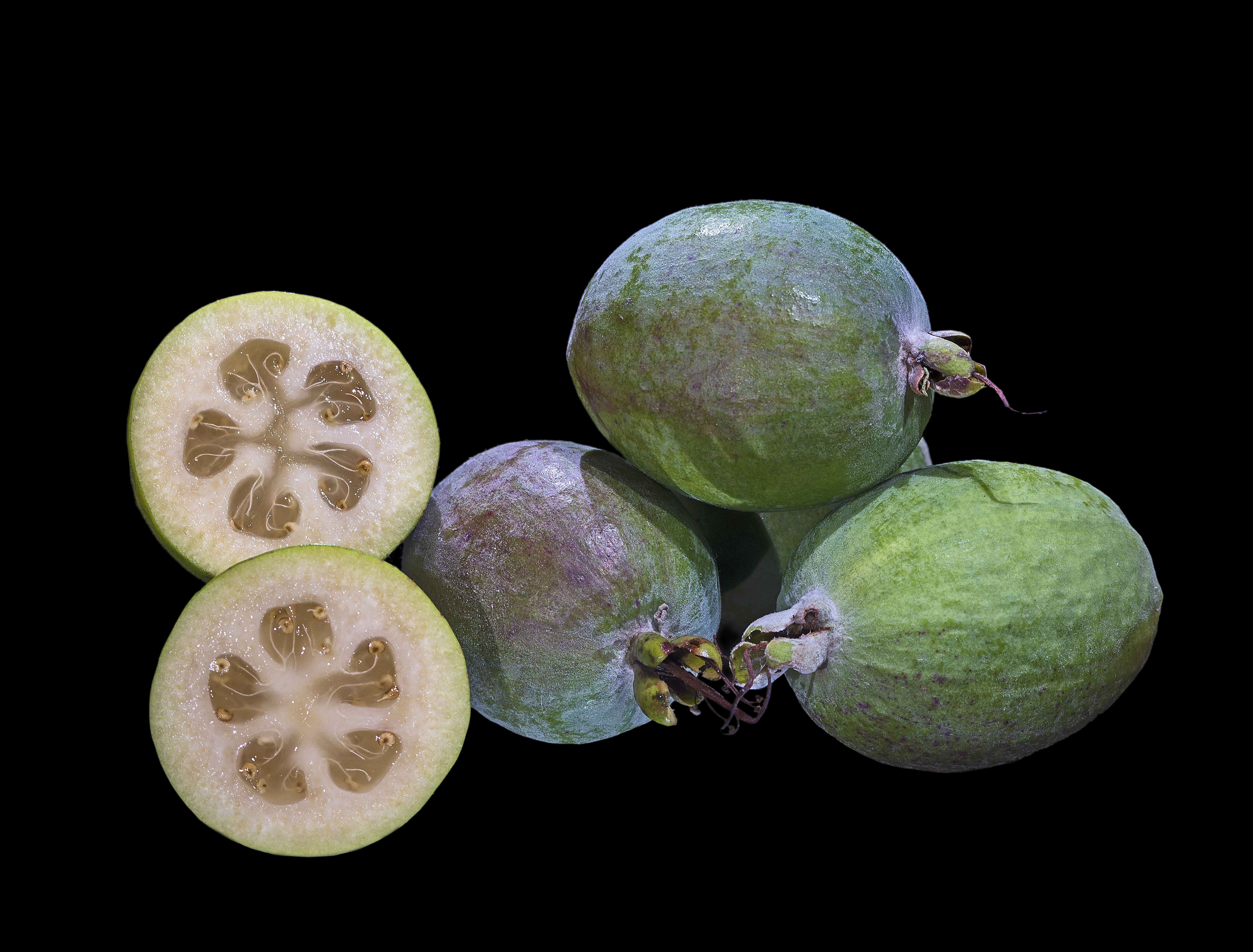
Coming to New Zealand is a huge adventure and step in my life. I’m truly enjoying discovering new habits and new ways of thinking, as much in science as in everyday life! Of course, as a proper tourist, I’m loving discovering Maori culture and New Zealand’s landscapes and environments. By the way, I should give an honourable mention to feijoas, which have been a revelation in my life and I think have claimed the top spot on my list of favourite fruits! (Is this excessive? No. Nothing is too much for feijoas)
Besides that, one of my nature lover objectives in New Zealand is to see a peripatus, which might not gonna happen, but wish me luck! In all cases, my plan here is mainly to go hiking everywhere and live my life in Hamilton, by taking all opportunities and having fun!
Anyway, you’ll most likely find me between my desk and the lab, where I feed my beloved spiders. So don’t hesitate to have a talk with me! 😉
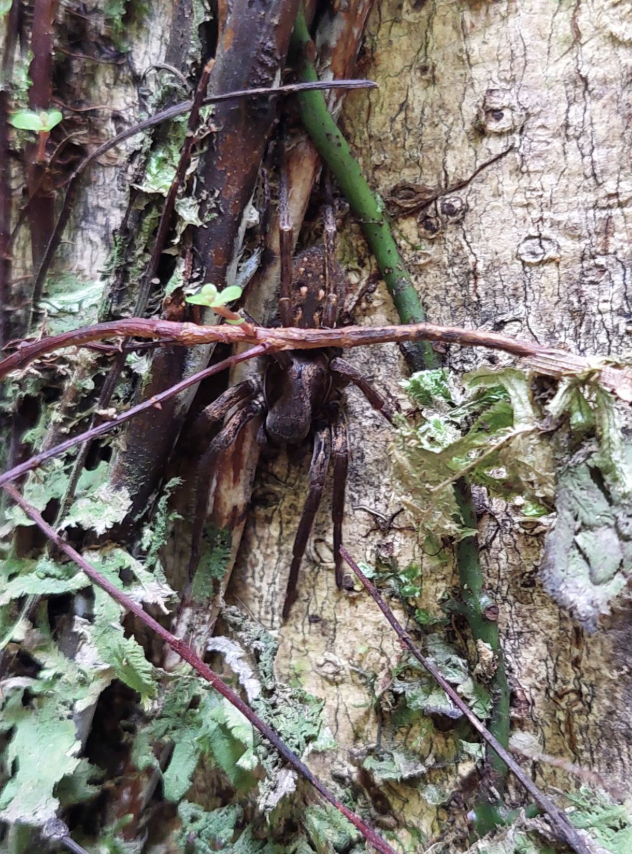
Most people visit the Chathams for the wild scenery, the precious bird fauna or the unbeatable fishing. But for me, the main reason for wanting to visit the Chathams was to finally meet the Rangatira spider (Dolomedes schauinslandii). Despite being the stuff of legend due to its whopping size and stout hairy legs, this species is no longer easy to see due to its disapperance from main Rēkohu/Wharekauri/Chatham island.
Huge, hairy but beautiful – a female Dolomedes schauinslandii on Mang’reSo big they’re cuddly! (Photo: Rose Collen)
Once found across the Chatham archipelago, the Rangatira spider is now restricted to Hokorereoro/Rangatira, Maung’re/Mangere, and Houruakopara islands, making it an At Risk (Relict) species. I was lucky enough to spend two weeks on Maung’re/Mangere and Hokorereoro/Rangatira islands in November 2020, where I joined the Department of Conservation Flora and Invertebrate Monitoring team. In addition to general invertebrate monitoring on the islands, I made the most of the chance to be in such a special place, and got to know the spectacular Rangatira spider.
As a behavioural ecologist specialising in the evolution of animal mating systems, I was particularly interested in learning more about the sex lives of these spiders. The Rangatira spider is one of more than 100 species in the Dolomedes genus, which are found all over the globe and can have truly bizarre mating features. For one relative in the USA (D. tenebrosus), things have gotten seriously extreme: in this species the males, which are tiny compared to the much larger females, mate and then spontaneously die – their hearts literally stop beating! Hanging from the female while their genitals are still inserted, they are eventually consumed by the female – quite a dramatic way to go!
In my lab at the University of Waikato we have recently learnt more about two of the mainland New Zealand Dolomedes – D. minor (the common nursery web spider) and D. aquaticus (a fishing spider found hunting on river edges in the lower North Island and throughout South Island). PhD candidate Simon Connolly has spent hundreds of hours in the lab observing mating behaviour in these two species, discovering that while there isn’t evidence of spontaneous male death, there are high rates of sexual cannibalism in one of the species and another peculiar adaptation: genital mutilation. After sperm transfer males break off a section of their genitals, leaving them embedded in the female while the male retreats very quickly to avoid being cannibalised (not always successfully). With this intriguing array of behaviours in mind, I set out to learn more about the Rangatira spider and how it fits in compared to its relatives in New Zealand and abroad.
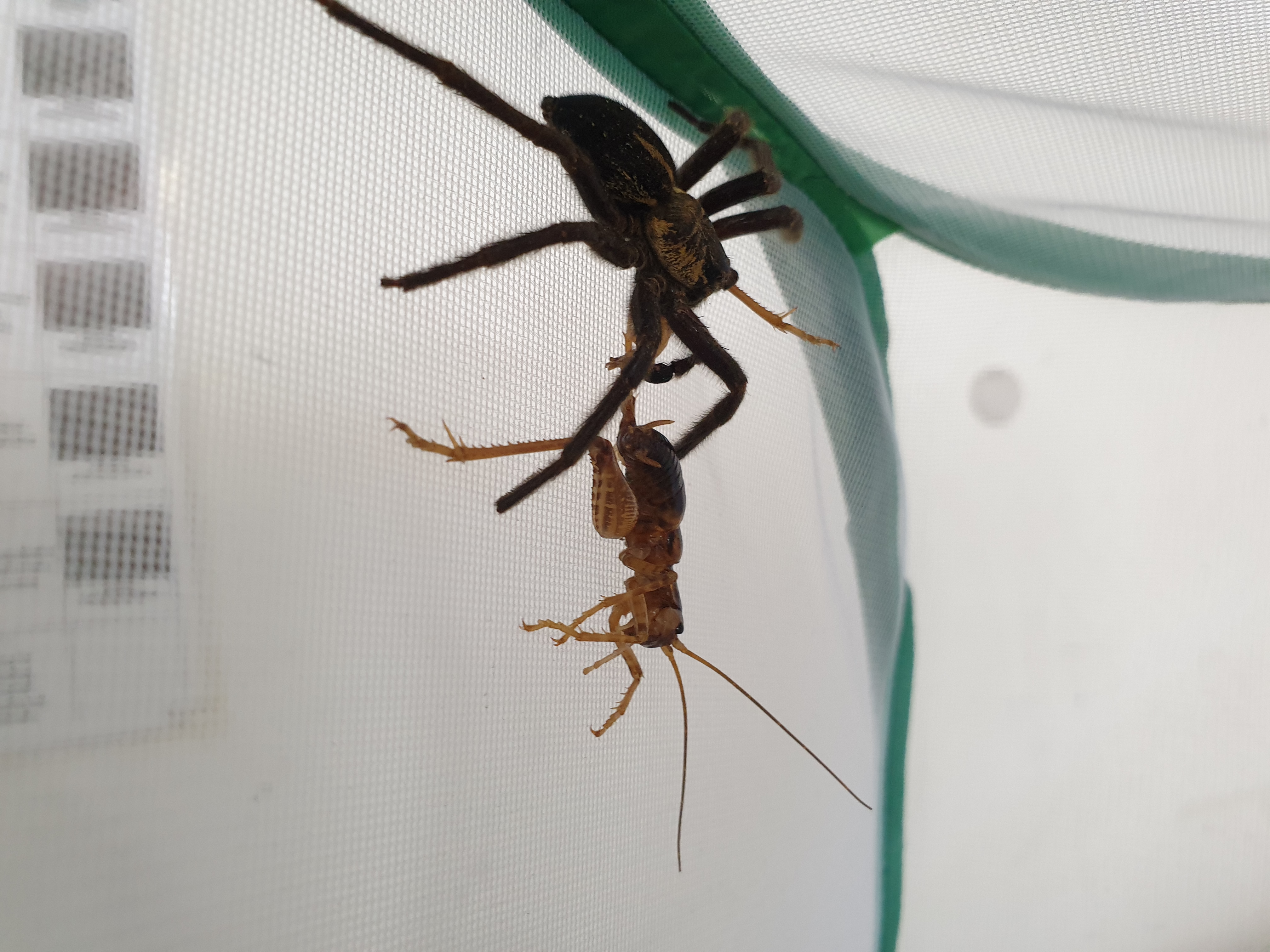
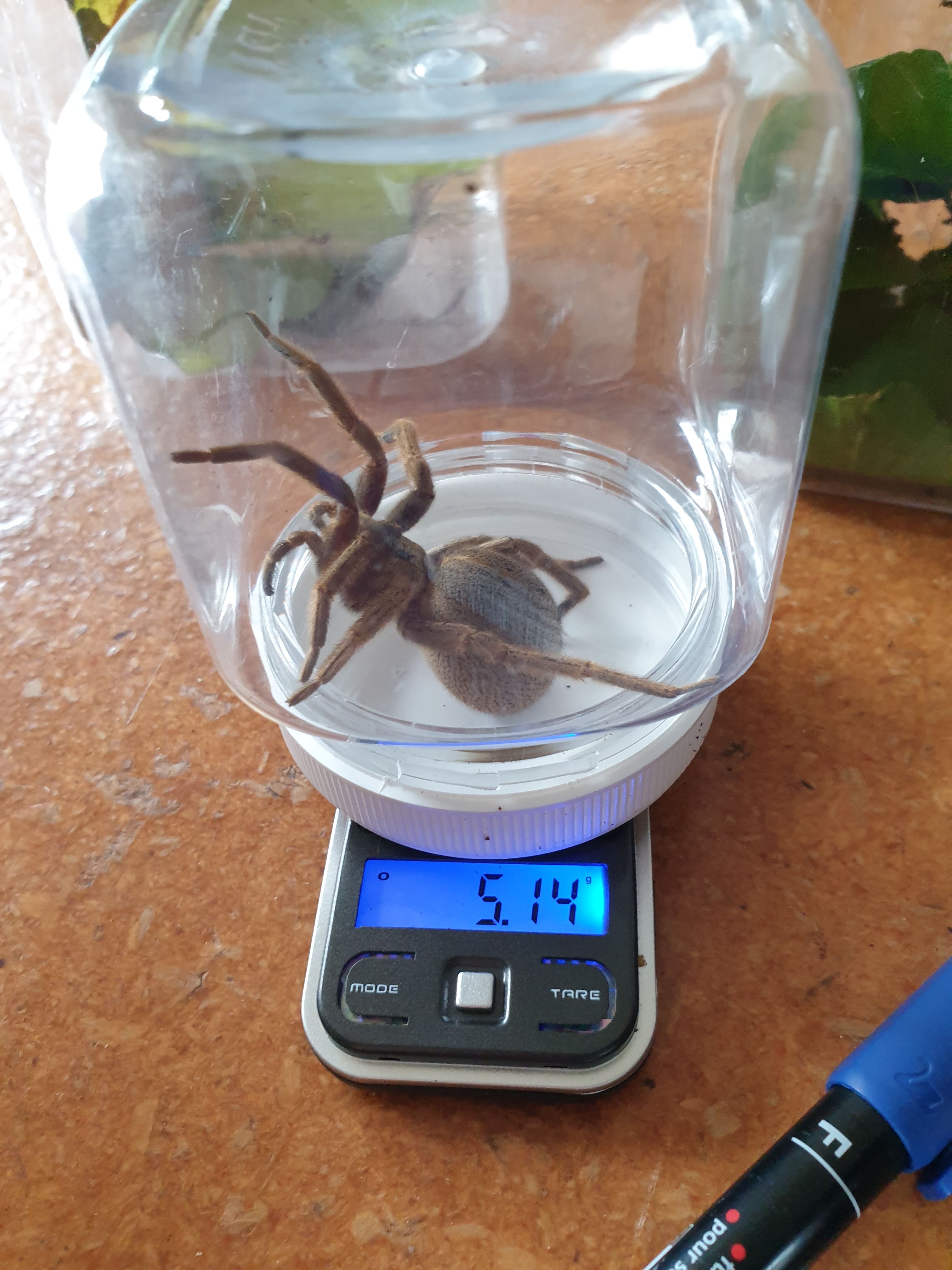
The Rangatira spider is a roaming hunter, meaning it doesn’t build a web to catch its prey. Instead, it can be found on tree trunks (and in the wood sheds & long drop!) munching on insect prey, especially wētā. Adult females are substantially heavier than males – one female that I weighed on Hokorereoro (affectionately named Porkie) was 5.14 grams! That’s about the same as a rifleman or grey warbler. On average, the females I found weighed 3g, while males were on average 1.8g.
A male Rangatira spider eating a wētā (Novoplectron serratum)The largest female recorded during the trip – an adult female ‘Porkie’ weighing in at 5.14 grams
During my time on Maung’re and Hokorereoro I did nightly walks between 9.30pm and midnight, using my head torch to capture reflections from their eyeshine. This is the easiest way to find spiders in the dark. On Maung’re I didn’t have much luck finding spiders on the tracks near the hut – in total over six nights 2 adult females and 7 adult males were located (no juveniles). They were all found on large akeake (Olearia traversiorum) trees, on the ground next to the track, or, in the case of two of the males, on the hut deck waiting to greet us after a long night out searching!
A male measured, marked and released on Maung’reMarked female with egg sac on Maung’re
However, on Hokorereoro I was in for a pleasant surprise. Unlike the habitat around the hut on Maung’re, which is quite scrubby, the hut on Hokorereoro is surrounded by lush forest. On my first night out, as I shone my head torch into the trees, I was rewarded with lots of glimmering eye shine – and on closer inspection, many Rangatira spiders. After the initial excitement of the first night, I spent the remaining three nights doing systematic transect monitoring, where I would walk 200 metres along the track towards the summit from the hut, recording spiders along the way. Finding spiders this way allowed me to test out the idea of a mark-recapture programme, which could be a useful way in future to estimate the population size and demography.
Every time I found a new spider I would take a GPS location and note where it was caught, then I’d take it back to the hut to weigh and mark with non-toxic white paint and a unique number. I would then return them back to their capture spots, release them and head off to catch some sleep. On subsequent nights I would search for both new spiders, and anytime I saw a previously marked spider I would record its number. Over four nights, 8 adult females, 12 adult males, and 16 juveniles were observed on akeake, karamu (Coprosma chathamica) and kawakawa (Piper excelsum) trunks. Of those, there were 10 re-sights (32% of released individuals), which was a good indication that a larger scale mark-recapture programme would be an excellent tool for conservation management. The main challenge to spider monitoring is constantly having to dodge seabirds as they come crashing through the canopy in return to their burrows. Rainy weather also makes observations difficult, with droplets resembling eye shine and trees turning into waterfalls.
Chrissie marking a male spider with a unique number for identifcation, before releasing back to it’s capture siteChrissie holding a large female Rangatira spider on Hokorereoro
So, what about sexual cannibalism, spontaneous death and genital mutilation? To describe mating behaviour, I set up pairs of males and females in mesh cages on the hut deck (Maung’re) and in the bird lab (Hokorereoro). There wasn’t much movement until about 9.30pm, when the spiders would start walking around once it was dark. I watched one male court a female by slowly approaching her, waving his front legs as he moved forward. He eventually climbed gingerly on top of her, and attempted to mate for about an hour – but it was difficult to confirm whether he successfully mated as he constantly rearranged himself and didn’t appear to manage to insert his pedipalps (sperm transfer organs). I didn’t observe any sexual cannibalism by the female or evidence of other extreme male mating behaviours, but with only a handful of trials it is too soon to make any conclusions.
Future work on this species is required to reveal secrets about its mating behaviour, but also importantly to learn more about its ecology. A key question regarding their conservation is why – given Dolomedes spiders are well-known to be great ballooners – they are no longer found on Rēkohu or Rangiaotea/Rangiauria/PittIsland. They are likely targets of predation by mice and weka, which may prevent re-establishment, but we need more research to answer these questions.
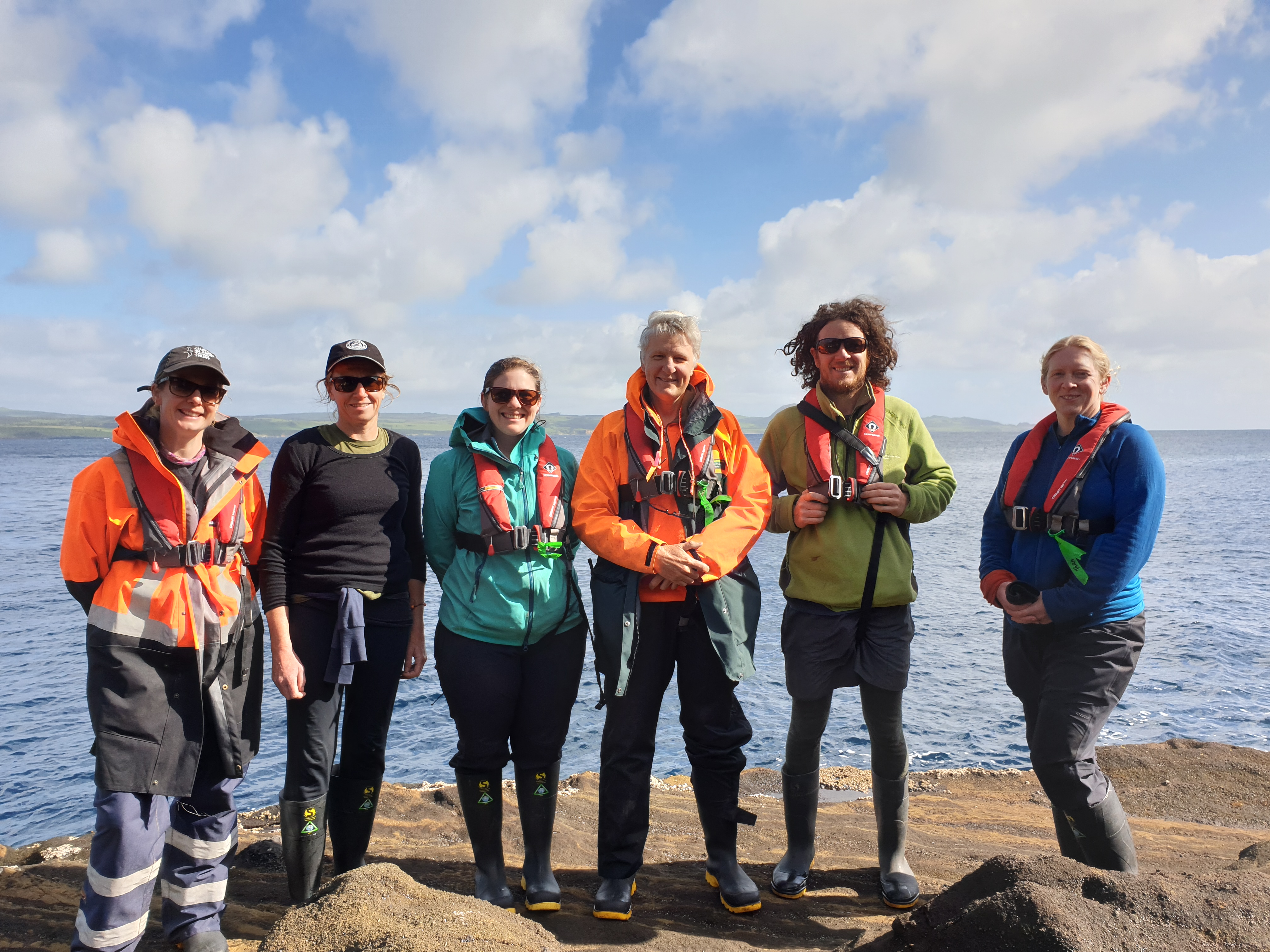
The flora and invertebrate monitoring team departing Hokorereoro (left to right: Erin Patterson, Bridget Gibb, Chrissie Painting, Catherine Beard, Tom Hitchon, Tara Murray)
Thank you to Catherine Beard (DOC) for enthusiastically supporting me to join the trip, to Tara Murray (DOC) for being my invertebrate monitoring partner & for staying up nights to help with spider spotting, the rest of the island team for putting up with my late night disturbances in the hut, and to the Chatham Island DOC staff for facilitating logistics for our trip. Thanks also to the Hokotehi Moriori Trust for putting us up for five nights at Kōpinga Marae while we waited for calm weather to cross to the islands, it was an honour to sleep in such a beautiful place.
Further reading:
Schwartz, S. K., W. E. Wagner, & E. A. Hebets (2013) Spontaneous male death and monogyny in the dark fishing spider. Biology Letters.https://doi.org/10.1098/rsbl.2013.0113
Sirvid, P. J., C. J. Vink , M. D. Wakelin , B. M. Fitzgerald , R. A. Hitchmough & I. A.N. Stringer (2012) The conservation status of New Zealand Araneae, New ZealandEntomologist. 35:85-90, DOI: 10.1080/00779962.2012.686310
Vink, C. J., N. Duperre. (2010) Fauna of New Zealand Number 64 Pisauridae (Arachnida: Araneae). Manaaki Whenua Press, Lincoln, New Zealand.
















 Invertebrate Behavioural Ecology Lab