My name is Bastien Clémot, I’m a 21-year-old Msc student, coming from France to learn more about scientific research and Arthropod behaviours! I will roam the lab corridors under Chrissie’s supervision till late June (Which is a quite short time, unfortunately). My primary objective here is to study the courtship and reproductive behaviours of nursery web spiders, but also to make some observations on Dolomedes dondalei, a species that everyone succeeds to find but me! (Love spiders and they’ll love you back, they said) Overall, I’m mainly interested in evolutionary and behavioural ecology in Arachnids, but also in applied modelisation.
Welcome Bastien! Dolomedes dondalei (Photo: Robert Briggs, Wikipedia Commons)
Apart from my obvious passion and fascination for those cutey-crawlers (who said ‘creepy’?), I might be a blend of a nerd, enjoying fantasy worlds, writing, role-playing, coding, and video games; and a nature lover, always eager to go hiking, bouldering, making wildlife observations and naturalist drawings! But globally I think that it’s just an unexhaustive list, as I tend to have spontaneous interest in everything.
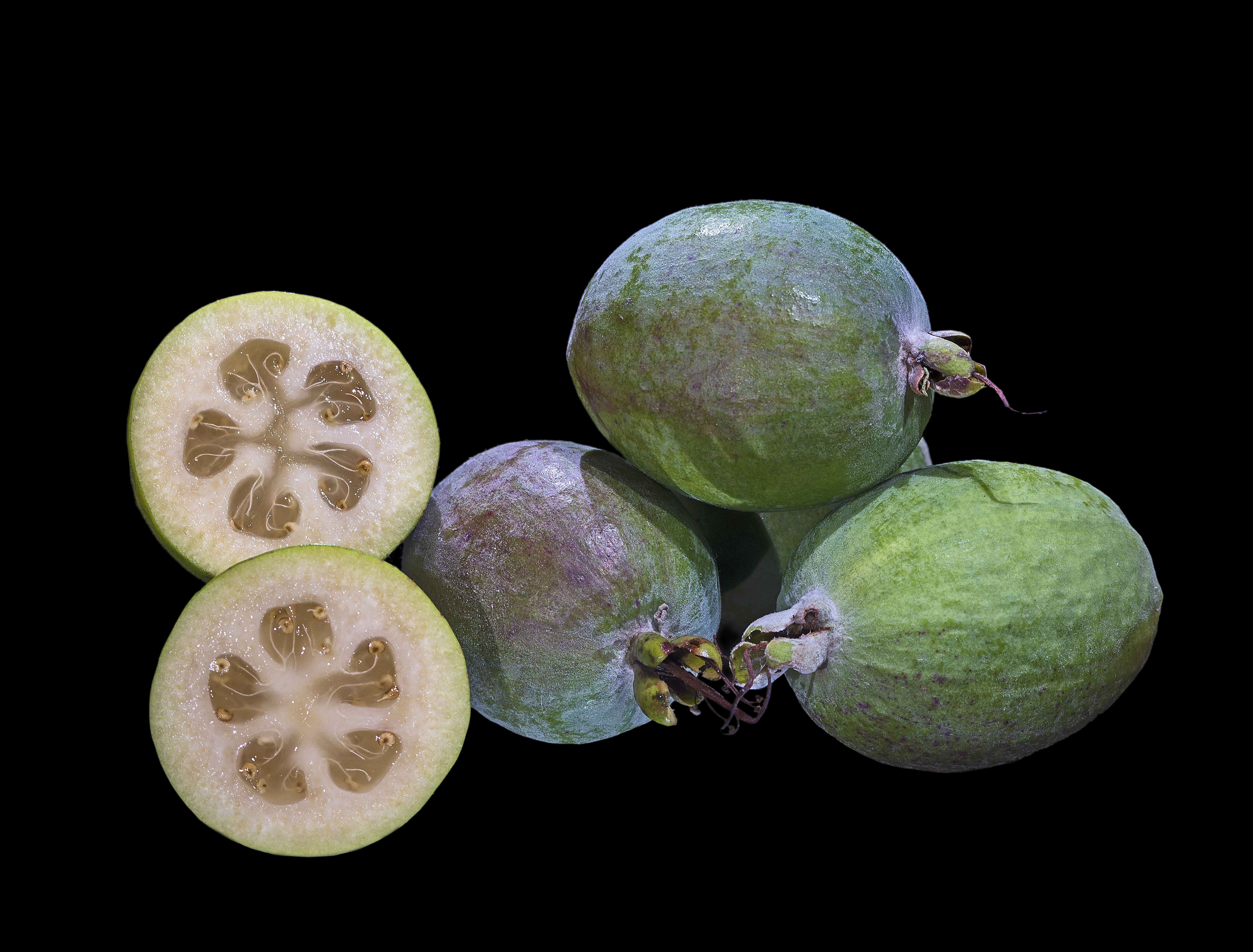
Coming to New Zealand is a huge adventure and step in my life. I’m truly enjoying discovering new habits and new ways of thinking, as much in science as in everyday life! Of course, as a proper tourist, I’m loving discovering Maori culture and New Zealand’s landscapes and environments. By the way, I should give an honourable mention to feijoas, which have been a revelation in my life and I think have claimed the top spot on my list of favourite fruits! (Is this excessive? No. Nothing is too much for feijoas)
Besides that, one of my nature lover objectives in New Zealand is to see a peripatus, which might not gonna happen, but wish me luck! In all cases, my plan here is mainly to go hiking everywhere and live my life in Hamilton, by taking all opportunities and having fun!
Anyway, you’ll most likely find me between my desk and the lab, where I feed my beloved spiders. So don’t hesitate to have a talk with me! 😉
Most people visit the Chathams for the wild scenery, the precious bird fauna or the unbeatable fishing. But for me, the main reason for wanting to visit the Chathams was to finally meet the Rangatira spider (Dolomedes schauinslandii). Despite being the stuff of legend due to its whopping size and stout hairy legs, this species is no longer easy to see due to its disapperance from main Rēkohu/Wharekauri/Chatham island.
Huge, hairy but beautiful – a female Dolomedes schauinslandii on Mang’reSo big they’re cuddly! (Photo: Rose Collen)
Once found across the Chatham archipelago, the Rangatira spider is now restricted to Hokorereoro/Rangatira, Maung’re/Mangere, and Houruakopara islands, making it an At Risk (Relict) species. I was lucky enough to spend two weeks on Maung’re/Mangere and Hokorereoro/Rangatira islands in November 2020, where I joined the Department of Conservation Flora and Invertebrate Monitoring team. In addition to general invertebrate monitoring on the islands, I made the most of the chance to be in such a special place, and got to know the spectacular Rangatira spider.
As a behavioural ecologist specialising in the evolution of animal mating systems, I was particularly interested in learning more about the sex lives of these spiders. The Rangatira spider is one of more than 100 species in the Dolomedes genus, which are found all over the globe and can have truly bizarre mating features. For one relative in the USA (D. tenebrosus), things have gotten seriously extreme: in this species the males, which are tiny compared to the much larger females, mate and then spontaneously die – their hearts literally stop beating! Hanging from the female while their genitals are still inserted, they are eventually consumed by the female – quite a dramatic way to go!
In my lab at the University of Waikato we have recently learnt more about two of the mainland New Zealand Dolomedes – D. minor (the common nursery web spider) and D. aquaticus (a fishing spider found hunting on river edges in the lower North Island and throughout South Island). PhD candidate Simon Connolly has spent hundreds of hours in the lab observing mating behaviour in these two species, discovering that while there isn’t evidence of spontaneous male death, there are high rates of sexual cannibalism in one of the species and another peculiar adaptation: genital mutilation. After sperm transfer males break off a section of their genitals, leaving them embedded in the female while the male retreats very quickly to avoid being cannibalised (not always successfully). With this intriguing array of behaviours in mind, I set out to learn more about the Rangatira spider and how it fits in compared to its relatives in New Zealand and abroad.
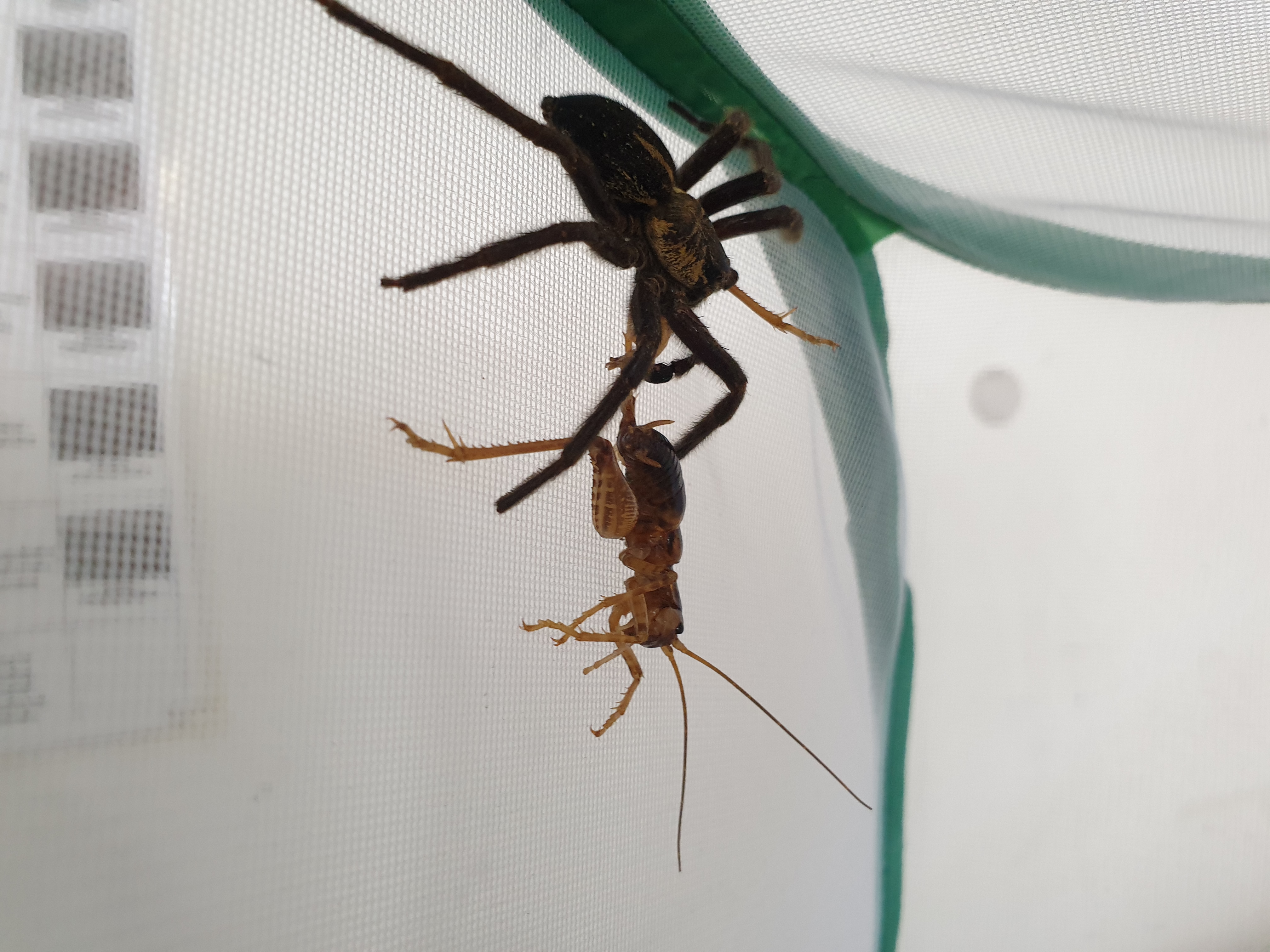
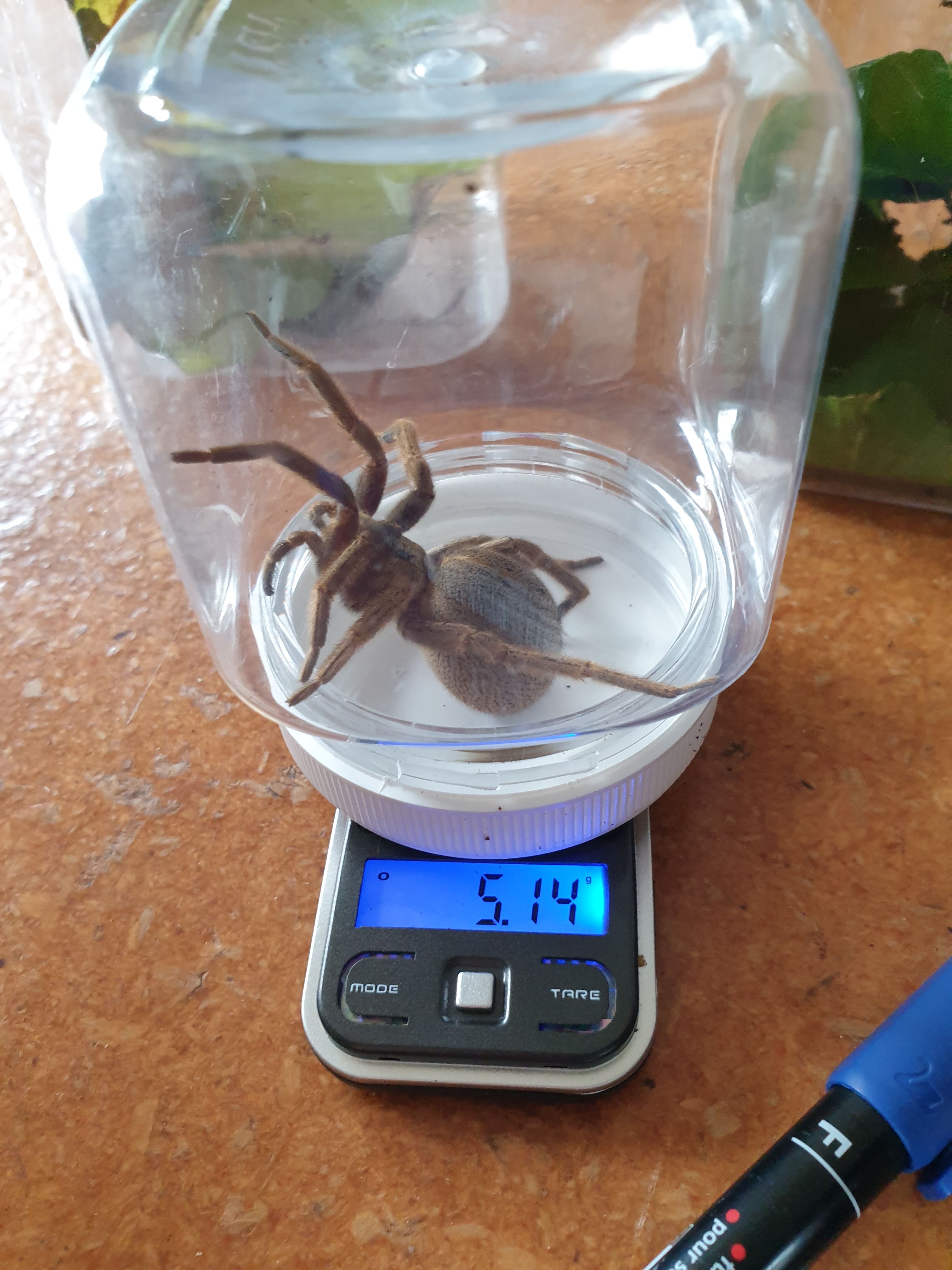
The Rangatira spider is a roaming hunter, meaning it doesn’t build a web to catch its prey. Instead, it can be found on tree trunks (and in the wood sheds & long drop!) munching on insect prey, especially wētā. Adult females are substantially heavier than males – one female that I weighed on Hokorereoro (affectionately named Porkie) was 5.14 grams! That’s about the same as a rifleman or grey warbler. On average, the females I found weighed 3g, while males were on average 1.8g.
A male Rangatira spider eating a wētā (Novoplectron serratum)The largest female recorded during the trip – an adult female ‘Porkie’ weighing in at 5.14 grams
During my time on Maung’re and Hokorereoro I did nightly walks between 9.30pm and midnight, using my head torch to capture reflections from their eyeshine. This is the easiest way to find spiders in the dark. On Maung’re I didn’t have much luck finding spiders on the tracks near the hut – in total over six nights 2 adult females and 7 adult males were located (no juveniles). They were all found on large akeake (Olearia traversiorum) trees, on the ground next to the track, or, in the case of two of the males, on the hut deck waiting to greet us after a long night out searching!
A male measured, marked and released on Maung’reMarked female with egg sac on Maung’re
However, on Hokorereoro I was in for a pleasant surprise. Unlike the habitat around the hut on Maung’re, which is quite scrubby, the hut on Hokorereoro is surrounded by lush forest. On my first night out, as I shone my head torch into the trees, I was rewarded with lots of glimmering eye shine – and on closer inspection, many Rangatira spiders. After the initial excitement of the first night, I spent the remaining three nights doing systematic transect monitoring, where I would walk 200 metres along the track towards the summit from the hut, recording spiders along the way. Finding spiders this way allowed me to test out the idea of a mark-recapture programme, which could be a useful way in future to estimate the population size and demography.
Every time I found a new spider I would take a GPS location and note where it was caught, then I’d take it back to the hut to weigh and mark with non-toxic white paint and a unique number. I would then return them back to their capture spots, release them and head off to catch some sleep. On subsequent nights I would search for both new spiders, and anytime I saw a previously marked spider I would record its number. Over four nights, 8 adult females, 12 adult males, and 16 juveniles were observed on akeake, karamu (Coprosma chathamica) and kawakawa (Piper excelsum) trunks. Of those, there were 10 re-sights (32% of released individuals), which was a good indication that a larger scale mark-recapture programme would be an excellent tool for conservation management. The main challenge to spider monitoring is constantly having to dodge seabirds as they come crashing through the canopy in return to their burrows. Rainy weather also makes observations difficult, with droplets resembling eye shine and trees turning into waterfalls.
Chrissie marking a male spider with a unique number for identifcation, before releasing back to it’s capture siteChrissie holding a large female Rangatira spider on Hokorereoro
So, what about sexual cannibalism, spontaneous death and genital mutilation? To describe mating behaviour, I set up pairs of males and females in mesh cages on the hut deck (Maung’re) and in the bird lab (Hokorereoro). There wasn’t much movement until about 9.30pm, when the spiders would start walking around once it was dark. I watched one male court a female by slowly approaching her, waving his front legs as he moved forward. He eventually climbed gingerly on top of her, and attempted to mate for about an hour – but it was difficult to confirm whether he successfully mated as he constantly rearranged himself and didn’t appear to manage to insert his pedipalps (sperm transfer organs). I didn’t observe any sexual cannibalism by the female or evidence of other extreme male mating behaviours, but with only a handful of trials it is too soon to make any conclusions.
Future work on this species is required to reveal secrets about its mating behaviour, but also importantly to learn more about its ecology. A key question regarding their conservation is why – given Dolomedes spiders are well-known to be great ballooners – they are no longer found on Rēkohu or Rangiaotea/Rangiauria/PittIsland. They are likely targets of predation by mice and weka, which may prevent re-establishment, but we need more research to answer these questions.
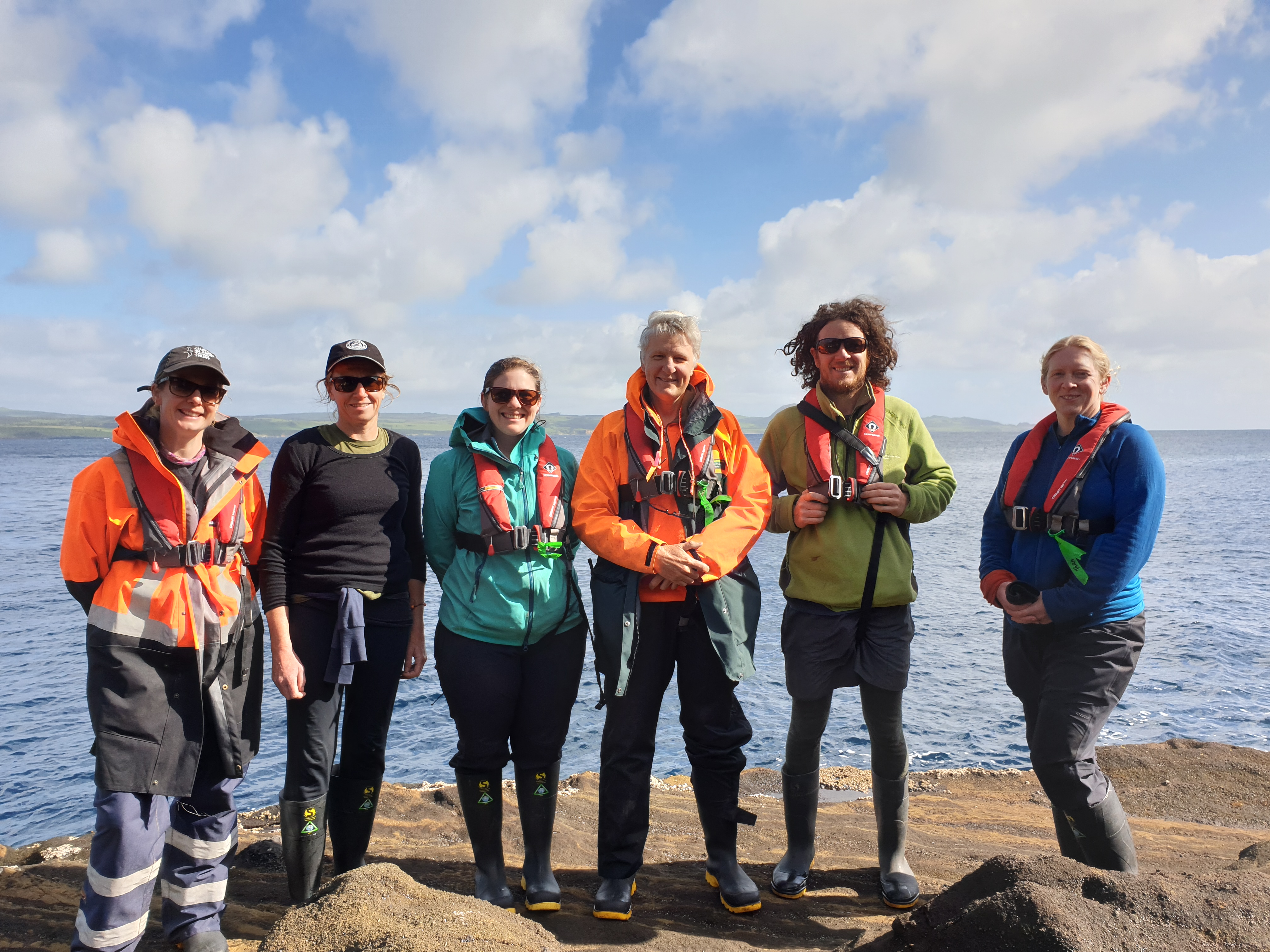
The flora and invertebrate monitoring team departing Hokorereoro (left to right: Erin Patterson, Bridget Gibb, Chrissie Painting, Catherine Beard, Tom Hitchon, Tara Murray)
Thank you to Catherine Beard (DOC) for enthusiastically supporting me to join the trip, to Tara Murray (DOC) for being my invertebrate monitoring partner & for staying up nights to help with spider spotting, the rest of the island team for putting up with my late night disturbances in the hut, and to the Chatham Island DOC staff for facilitating logistics for our trip. Thanks also to the Hokotehi Moriori Trust for putting us up for five nights at Kōpinga Marae while we waited for calm weather to cross to the islands, it was an honour to sleep in such a beautiful place.
Further reading:
Schwartz, S. K., W. E. Wagner, & E. A. Hebets (2013) Spontaneous male death and monogyny in the dark fishing spider. Biology Letters.https://doi.org/10.1098/rsbl.2013.0113
Sirvid, P. J., C. J. Vink , M. D. Wakelin , B. M. Fitzgerald , R. A. Hitchmough & I. A.N. Stringer (2012) The conservation status of New Zealand Araneae, New ZealandEntomologist. 35:85-90, DOI: 10.1080/00779962.2012.686310
Vink, C. J., N. Duperre. (2010) Fauna of New Zealand Number 64 Pisauridae (Arachnida: Araneae). Manaaki Whenua Press, Lincoln, New Zealand.
“Something Something Science” is a new, occasional blog series by me, Simon Connolly. I am a (hopefully) final year PhD candidate, and I will be sharing my expertise on insects, spiders and other cool scientific topics. I will also share my opinions on discussions in the science discourse and media, through my perspective as an early career scientist!
You don’t need to be a scientist to enjoy this, and even if you are, you might still learn something! So…scroll on down for the first post in this new series…
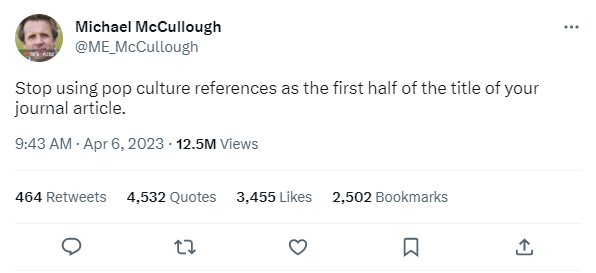
“Stop using pop culture references as the first half of the title of your journal article.” This a recent tweet by Michael McCullough, a California based psychologist and author. The response from the twitter scientific community has been overwhelmingly… sarcastic.
Many scientists have replied with their own papers that bear such titles: “#SoMe the Money! Value, Strategy, and Implementation of Social Media Engagement for Infectious Diseases Trainees, Clinicians, and Divisions” and “Sharks on a plane: Large shark fin seizure shines light on shark exploitation.” Others have simply replied with mock titles for articles on the subject: “Stop Making Sense: A Multi-pronged Analysis Of The Futility of Giving Academic Advice Over Twitter”, “I’m just here for the replies: An observational study of the Twitter roast of killjoy professors.”, or the truly perfect “Never Gonna Give You Up: The Use of Pop Culture References in Journal Article Titles.”
Whilst I’m sure we can all agree that these are ‘sick burns’, it does lead to the question of why people feel so strongly about this. The original tweet might seem like a fairly innocuous opinion that has been met with an avalanche of (mostly humourous and well intentioned) responses. I believe that this tweet cuts to the core of a source of tension in the scientific community, and a key question as to how science should be communicated.
But first, let’s talk about science writing, or more specifically journal articles. The journal articles that McCullough refers to are the main way that scientists communicate results, and are read by other scientists when building their own work. They are also, often, quite dry reading. They involve a dispassionate summary of current knowledge; a detailed explanation of how an experiment or study was conducted; a description of the statistics involved; a detailed breakdown of the outcome of those statistics; followed by a robust discussion of the implications of the findings on the scientific world. Can all of these aspects be exciting to the right people? Of course! But there is a reason why you won’t find these articles in the magazine stand at the supermarket, or on the homepage of Buzzfeed. Science writing is often dense and tedious. Poor writing also compounds these problems. Many scientists habitually rely on words like “heretofore’, “moreover”, “correspondingly” and “notwithstanding”, that are used to create overly-verbose, overly-long word vectors that utilise advanced nomenclature and terminology to create a false sense of intelligence and academic rigour, either deliberately or simply incidentally (in other words, scientists use a lot of big words to make themselves sound smart). I am certainly guilty of this too.
The tediousness of scientific papers has created a whole ecosystem of science communicators, journalists, TED talks, podcasts, and blog posts (hello there), which exist to communicate science to a general audience (hopefully without boring them to tears!!). All of this is great, and science communication is an incredibly valuable field! But what about the scientists? What about the people who have to read dozens of journal articles a week, as well as writing their own. Should they not be allowed to have a little fun?
Well, some of us do, by adding little pop culture references to our article titles, and little jokes to our writing. However, others argue that this is unprofessional. These science purists (AKA, the fun-police) argue that the purpose of scientific articles is PURELY to communicate the science, and not to entertain the audience reading it. Many point to legitimate concerns such as excluding those who are not “in on the joke”, an overuse of low hanging fruit (in 2005 there were over 4000 uses of “To be or not to be”) or that there is evidence that articles with pop-culture titles are actually cited less by other scientists (though this could be because the “fun-police scientists” don’t want to engage with these works)! However, I think to dismiss the idea entirely, misses the point.
Something that is fun to read is going to be easier to read. A little joke title can go a long way to getting your audience engaged with the work. A well chosen reference can also be an excellent way to communicate complex information. For example, an article entitled: “The hidden diversity of dimorphic fungal pathogens” sort of tells you what the article is about…however, if you change the title to “Fantastic yeasts and where to find them: the hidden diversity of dimorphic fungal pathogens” the audience immediately knows what the paper is about! We’re going on a fantastic yeast hunt, and honestly, who wouldn’t want to!?
But, the other thing to consider is that scientists are human. We like fun, often silly things. We want our jobs to have moments of levity, especially during tasks that are often bland. Pop culture is also a huge part of who many of us are, and speaks to why we became scientists in the first place. I would be a liar of I said that part of the reason I want to complete my PhD is so I can say “I’m a doctor, not a…” at every possible opportunity. And I think many of my peers are inspired by scientists in pop-culture (both fictional and not). To ask for the wholesale removal of these references from people’s work is doing a disservice to the fun-loving, science-loving people who write them.
Chrissie is looking for a keen PhD student to join her recently Marsden funded project looking at applying complex systems to understanding mating system evolution. This project will involve lots of lab and field work on Dolomedes fishing spiders, as well as using network science and phylogenetic comparative methods to figure out evolutionary pathways to monogyny and other mating systems.
Head on over to the Opportunities page to find out more & please circulate widely!
Applications close 28th February for an ideal start date of 1st June 2023.
A huge congratulations to Lara and Michaela for graduating with Masters of Science (Research) First Class Honours from the University of Waikato this week. So proud of what these two clever scientists have achieved and can’t wait to see where they go next. All the best you two!
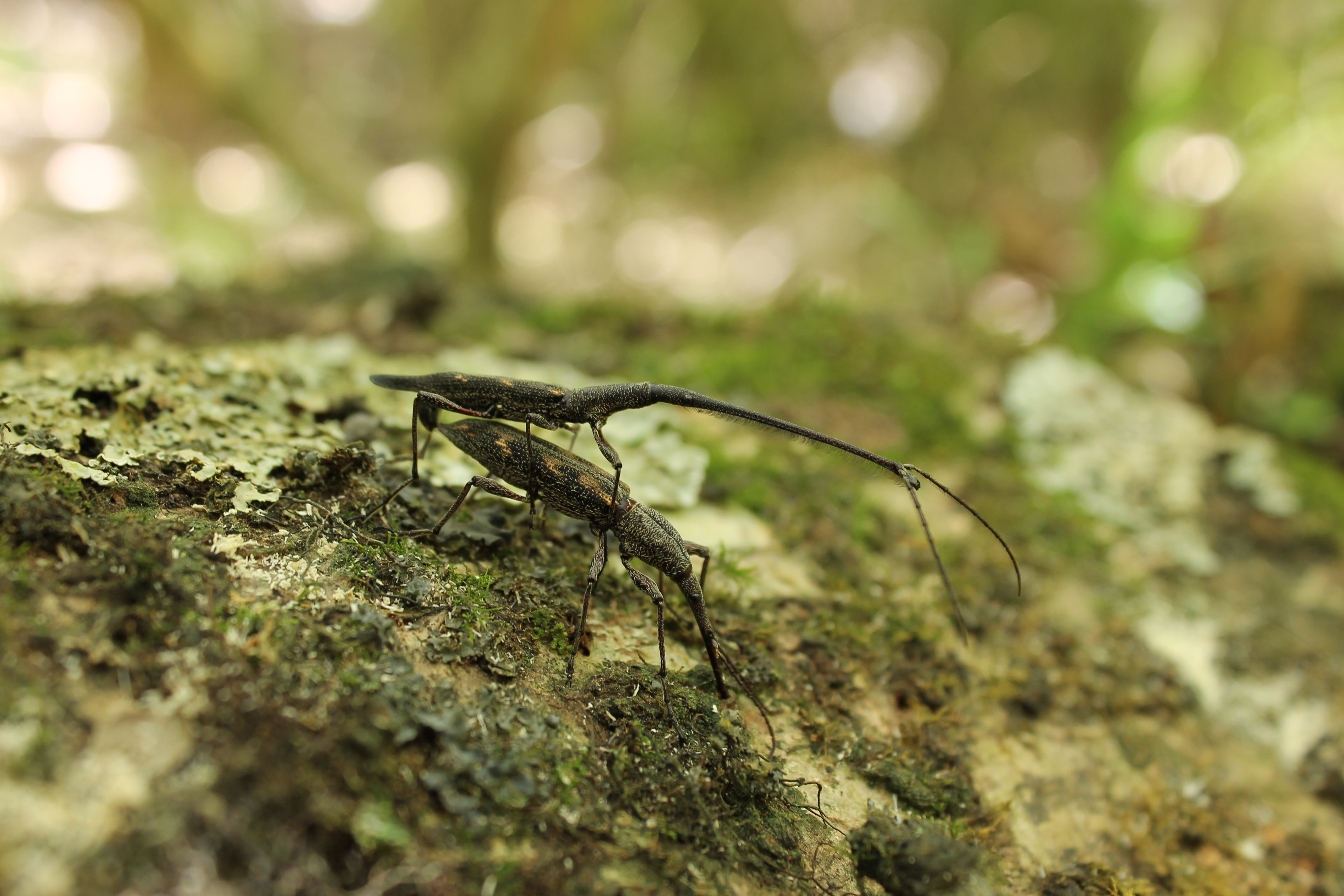
The day all of us bug enthusiasts have been waiting for has finally arrived. It is time to vote for Aotearoa’s Bug of the year 2023. Our lab group cannot wait to get our votes in for next years winner… The NZ Giraffe Weevil, obviously. Unfortunately the competition is quite stiff so the giraffe weevil may only win by the tip of their long nose.
To ensure our favourite crosses the finish line first we have dedicated a special page to showing off how iconic the giraffe weevil is. So if you want to bask in the giraffe weevil’s glory or simply test the confidence you have in your favourite bug’s chances go to our BoTYpage.
As you can see from just a few #Bugoftheyear2023 tweets this is going to be one nail-biting competition and the giraffe weevil will really have to pull out all the stops to convert it’s naysayers. If you would like to help us get the giraffe weevil into the winners circle, join our campaign on twitter using the hashtag #TeamGiraffeWeevil or click here to vote.
I'm so excited about #Bugoftheyear2023 There are so many great candidates, but my pick of the bunch is going to be the rarest and most threatened—the Canterbury knobbled weevil has been declared extinct once and is clinging with a tiny population in one location in Canterbury… https://t.co/k0p7uZ2X8q
#BugOfTheYear2023 All candidates are worthy of being Aotearoa NZ Bug Of The Year 2023, but this chonker, the Robust Grasshopper surely is in the mix! DYK, it is probably the first insect in the world to have a fenced enclosure created purely for its conservation @NZEntoSocpic.twitter.com/mmITd3pApK
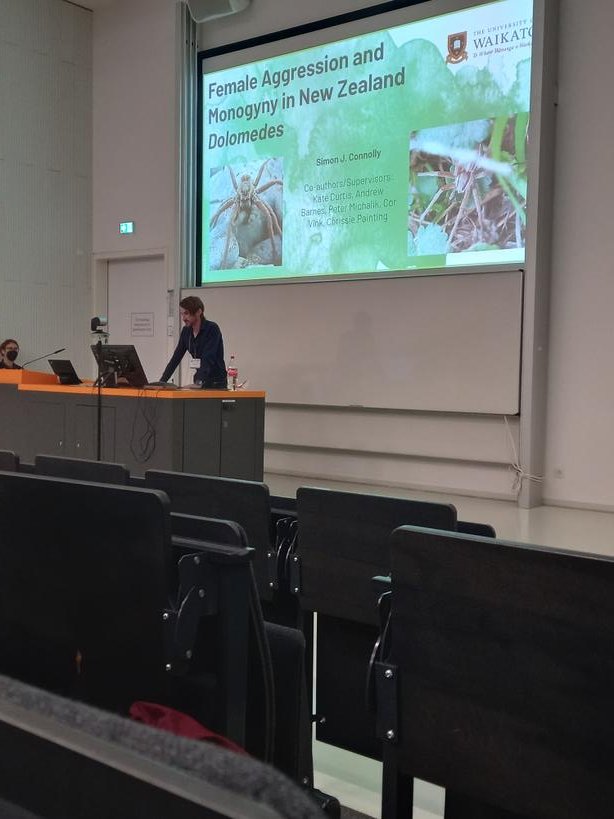
Congratulations to PhD student Simon Connolly who won not one, not two, but THREE best oral presentation awards last week! Along with Ashton McDonald and Erin Steed, Simon represented the Painting lab at the Te Aka Mātuatua School of Science Postgraduate Conference. He won both the Best Presentation of Ecological Science and Best Overall Presentation.
Ashton McDonald, Erin Steed & Simon Connolly at the School of Science Postgraduate Conference Simon cleaning up with 2 best talk awards
Simon, Erin and Chrissie then attended and presented at the 70th New Zealand Entomological Society Conference in Rotorua the following day. Chrissie forgot to take many photos, but we all had a great time connecting with new and old friends, and learning about all the great entomological research happening around the motu. The dinner at Te Puia with a tour of the geysers at night was a highlight!
Pōhutu geyser
At the close of the meeting Simon once again cleaned up by winning the Best student oral presentation at the conference. Well done Simon!
Kristal Cain (University of Auckland), Stephanie Godfrey (University of Otago) and myself are guest editing an upcoming special issue on animal behaviour in the New Zealand Journal of Zoology. If you’re interested in contributing please get in touch with us. Details from the Royal Society webpage pasted below and you can visit here for more information.
This special issue of the New Zealand Journal of Zoology invites submissions with a focus on the remarkable diversity of animal behaviour in Aotearoa New Zealand and Australasia more broadly.
Behaviour is one of the most fascinating aspects of biology, shaped by interactions between morphology, physiology, cognition, and ecology. Variation in behaviour can have profound consequences for survival and reproduction. Consequently, behaviour is a lynchpin for whether or not animals adapt to the rapidly changing planet and understanding behaviour is central to predicting how populations and ecosystems have and will change. Aotearoa New Zealand and Australasia have some incredibly unique and understudied animals, and this region also plays host to a number of recent arrivals that have adjusted their behaviour to live here. This issue is open to research on them all.
We invite submissions that address the vast variety of animal behaviour research in Aotearoa New Zealand, Australia and the rest of Oceania, the Pacific Basin, South America and Antarctica. This special issue takes a broad view of animal behaviour encompassing empirical, theoretical and comparative approaches. We welcome submissions on the role of ecology and evolutionary history in explaining the occurrence, diversity and adaptive significance of behaviours, and the use of comparative approaches to explore the evolutionary and ecological drivers of behavioural diversity. Submissions concerning the place of animal behaviour in te ao Māori (Māori worldview) or other indigenous perspectives are strongly encouraged. Topics might include, but are not limited to: social and mating behaviour, foraging and predator/prey interactions, reproductive and parental behaviour, dispersal and migration.
Submission information
Please email a preliminary title, list of potential authors and a short descriptive paragraph outlining the scope of your proposed manuscript by 11 Whiringa-ā-rangi November 2022 to the guest editors Dr Kristal Cain (Auckland; k.cain@auckland.ac.nz), Dr Christina Painting (Waikato; chrissie.painting@waikato.ac.nz) and Dr Stephanie Godfrey (Otago; stephanie.godfrey@otago.ac.nz). The guest editors will make a decision on which manuscripts to invite for the special issue and authors will be notified by 25 Whiringa-ā-rangi November 2022.
Note that an invitation to submit does not guarantee acceptance for publication, which will depend on the outcome of the usual peer-review process and authors meeting critical time schedules.
The anticipated manuscript submission deadline is 28 Hui-tanguru February 2023, with the aim of getting the special issue formally published by late 2023. Individual articles will be published online with a DOI before appearing in the compiled special issue.
People often ask me why I study spiders. Almost as often, they ask me why I study spider sex. These are fair enough questions, these things are strange and often absurd to the casual observer. My answers to these questions vary, though now I suppose I can answer them with “To see the world!”, as that’s exactly what I just did.
I recently traveled to Europe to present my research at the 33rd European Congress of Arachnology. My travels took me from the Bundestag in Berlin, to the nightlife of Helsinki, and along the way, I found a few reminders of why I study spiders.
Enjoying the sites of Greifswald
This year, the Congress was held in Greifswald, Germany. My travel involved 3 flights, a three hour train ride, and catching a taxi in the dead of night…with my very poor German language skills. Along the way, I was acutely aware of the microscopic elephant in the room, but I managed to avoid a COVID-19 infection through my caution…and sheer good luck.
Greifswald is simultaneously a sleepy German town…and a centre for cutting edge spider research in Europe. It was here that I met with experts from all over the world, all of whom share my passion for the weird and wonderful ways of arachnids. I had the pleasure of benefitting from their expertise…and the somewhat nerve-wracking experience of them benefitting from mine! Over the course of the conference, I heard about: the venom potency of different spider taxa, a mysterious scorpion that lives only in ant nests, the finer aspects of a male spider’s courtship drumbeat, and the use of liquid nitrogen to capture copulating spiders! All great reminders of why spiders and arachnids are so fascinating to study.
I also spent time learning micro-CT segmentation techniques from Peter Michalik and Dante Poy. These techniques will serve me well in my PhD going forward, and in the rest of my scientific career.
Evidence that Simon didn’t just look at pretty buildings & eat strange snacks
Both the congress and learning these techniques were mentally invigorating experiences. To speak with experts in my field, whose work I have cited and read more times than I can count, and seeing their passion for their work, is a reminder of why I study spiders. Spiders are cool, and the humans that study spiders are some of coolest people in the world.
A 3D reconstruction of a spider palp with the embolus highlighted in green
Alone, and with these cool people I explored the tiny town of Greifswald, and its surrounds. I learnt about the Baltic and the DDR; ate Gherkin flavoured Haribo, and other local delicacies; and absorbed the sights, sounds and smells of another culture (to put it in a horribly cliched way).
After my work in Europe was done, I had some time for some personal travel. I used the opportunity to visit a friend of mine in Finland. Here is where I found another reminder of why I study spiders…in the most curious of places.
In amongst the bustling streets of Helsinki, you will find Luonnontieteellinen museo (The Finnish Museum of Natural History). If you ascend the stone staircase to the top, you will find a small, unassuming glass case. Inside this glass case is a taxidermied specimen of a newborn calf. Viewed from the side, as you approach it, this specimen in unremarkable. As you move to the front however, you can see that this calf had two separate and functional heads.
I think this calf means different things to different people. To some it is a mere curiosity, something to glance at on the way to a more important exhibit. To others, it is a broken and twisted creature. To me though, it is a reminder of not only the value and transience of life, but of our responsibility to that life as both scientists and human beings. And that there is beauty in the strange, the absurd and the unique…just like the weirdness of spiders. I think poet Laura Gilpin agrees with me…













 Invertebrate Behavioural Ecology Lab